How Not to Use Not

I spend a great deal of time reading books on writing and I’ve found a gem.  I know a lot of famous authors have referred people to this book, and I couldn’t agree more.  The book is The Elements of Style by Strunk/White/Kalman.  This is a marvelous “how to” book on writing.  It tends to be a bit heavy on the grammatical use of the English Language, but it has some Jewels of Advice buried in it’s pages.  I would like to give full credit to these authors for what I’m about to share with you.  The information is found on page 34 and 35 of this wonderful little book.

In my past days as an Editor in Chief, I would notice the over use of certain words and “not” was one of them.  The authors of this book offer some very good suggestions about the use of the word “not”.  First of all, avoid it.  Their quote, “Use the  word not as a means of denial or in antithesis, never as a means of evasion.” (page 34)   “Consciously or unconsciously, the reader is dissatisfied with being told only what is not; the reader wishes to be told what is.  Hence as a rule, it is better to express even a negative in positive form.” (Page 35)

This paragraph goes on to list a few examples which I will share with you here. (Page 35)

  • not honest   should read  dishonest
  • not important should read trifling
  • did not remember should read forgot

This goes along with their advice to use as few words as possible and be concise with your description.  Easier said than done, but it does make for much more powerful writing.  I also read On Writing, by Stephen King and he proclaims the three authors of The Elements of Style, as pure geniouses.  I couldn’t agree more.  If you’d like another example of clear concise writing that will draw you into the scene read some of Dean Koontz’s books.  They are the epitome of what Strunk/White/Kalman are referring to.

Posted in Writing Tips | Tagged , , , , , , , , | 1 Comment

Graphic Ways to Build Your Brand as an Author

3D render of jigsaw pieces. Part of a series.

Many authors new to the published scene are astonished at how overwhelming the marketing piece to our industry is. Believe me, I’m still learning! In this blog post, I’m going to post a few tips that are necessary to begin to building an author brand.

Kelly Logo

Branding Tip #1
Get a Logo to represent you as an author. Use it on everything you present to both the digital community and in person. Just like a business uses their logo to represent who they are and what they stand for so should you. After all you’re a hot commodity.

SS banner

Branding Tip #2

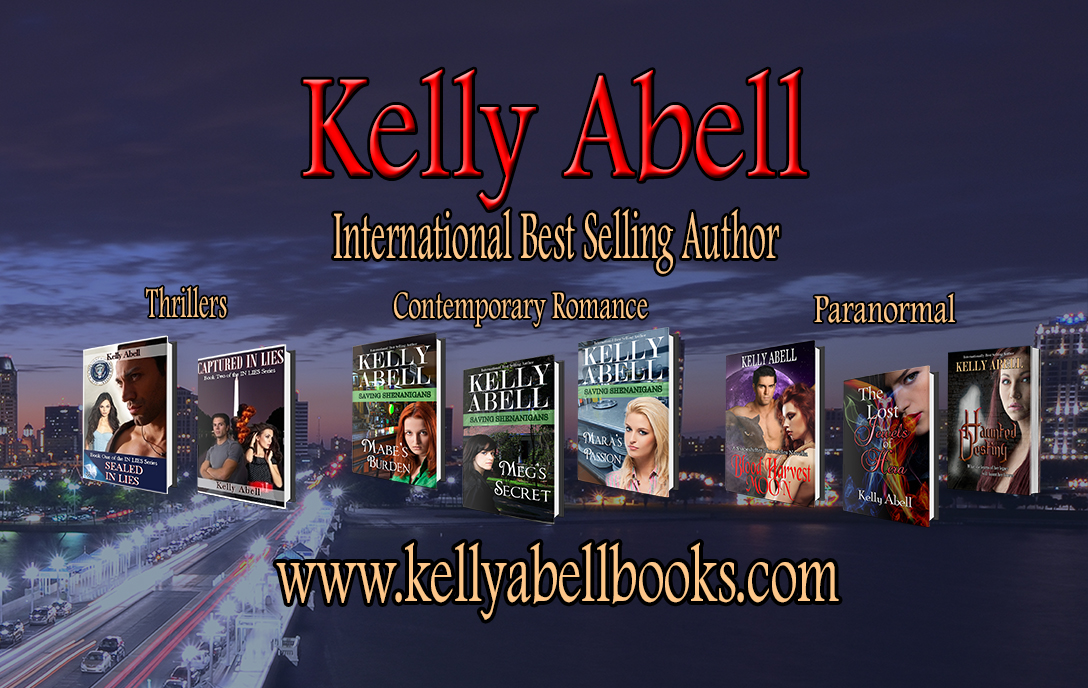
Have a FB and Twitter Cover photo that speaks to your brand. A custom designed banner can incorporate your logo, your books, and other elements that speak to your brand. It can be for your current release, or a statement about you as an author. Keep it consistent though.

Branding Tip #3

Now that you have a logo and a banner, you need either a website or a blog. Somewhere your readers can find out about you as an author, learn about new releases, book signings, and other appearances. They also want to hear about your characters, how you write, and you can throw in some personal stuff if you feel comfortable doing so.

Branding Tip #4

Begin building a social media presence. Start a FB page, Twitter page, and/or post on Instagram or Pinterest. There are lots of other social media sites that are specific to book lovers, such as Goodreads.com.  You also don’t want to neglect to have an Amazon author page fully filled out so when your readers want to learn more about you and your books, you’ve got lots of data all in one place.

Branding Tip #5

Don’t forget about your print media. Have bookmarks, business cards, or some type of printed material to hand out to readers. I recently went on a cruise and handed out tons of business cards to people reading e-readers. No…I didn’t walk up to them and just hand them a card. I wasn’t that obnoxious, although it’s not a terrible idea. I just didn’t want to get tossed into the waves for soliciting. BUT if I’m having a conversation with someone about what they’re reading, and it just happens to come up that I’m a writer…well…then I’ve got something to hand them. My cards have the amazon link to my author page on the back so people can scan it with their cell phones and see all my fabulous books. 🙂

Business Card Author Back Business Card Author

That’s probably overwhelming enough for now. If you don’t have a clue as to how to get any of these items, of course I can help with my company Selectografix, or there are lots of great places to have banners and logos done. A lot of people have success with Fiver.com or are adventurous enough to try and design their own. Wherever you go, just make sure it it looks professional. It’s your brand and you want people to remember you.

Posted in Uncategorized | Tagged , , , , , , , , , , , , | 3 Comments

How the word “Was” Affects Telling Vs. Showing #amwriting

I must tell you that I am one that constantly wants to improve my craft.  I think we are always developing as writers, and when you find a friend that makes you better, you HANG on to that friend!  I have such a friend in author Frank Allan Rogers.  Frank is the author of an exceptional book entitled Upon A Crazy Horse, and he also edited my book Captured In Lies.  I respect Frank’s approach and I wanted to share something with you that he just recently sent to me.

One of my projects was a YA series entitled Mystic Lake Guardians.  The first book was The Haunting of Mystic Lake, and the series was about a group of 5 teens with some very special abilities who become embroiled in some pretty sticky paranormal conflicts and work to save each other and their town.  In the first book, I had a character named Logan who was a Shade.  A Shade is basically a ghost.  I was having difficulty with how I would “show” versus “tell” when the character was no longer alive and didn’t have a physical body.

Frank analyzed one of my chapters to help me with this issue.  Not only did I get some great feedback about how to approach the physical reactions of a ghost, but something else came to light as well.  In one chapter, I used the word “WAS” 64 times!  Oy!  I want to share below what Frank had to say about that.

These are Franks words:

Showing Vs Telling

“Was” is the biggest action thief ever invented. You’ll find that word 64 times in this chapter, and a few “wasn’t” words also. That writing trap is an easy one to fall into. Remember, those words are just a state of being, not action. To show your story instead of telling it, eliminate about 80 % of those. Write around them if you have to. For example, instead of saying, the moon was covered by a milky film, try, a milky film covered the moon. You’ll feel the story come to life, as if it’s happening while you read. And that’s essential to transport your reader to the time and place of your tale.

I also want to share with Frank’s suggestion on how to keep my Shade from being flat and boring.  Here was his suggestion:

Kelly, I understand the fix you’re in, about Logan experiencing human feelings and emotions without being human. But you have to use the phrases and descriptions you need for Logan; otherwise, he becomes a cardboard character. I had the same situation in chapter 1 of my novel in progress. Here’s how I handled it: August Myles knew he was no longer mortal, and yet he had not been freed from the bonds of mortality—hunger, excitement, fatigue, pain, fear, and heartache—all were as real now as they had ever been. Yes, it’s a bit of a disclaimer, but it worked for me.

 I hope this helps you improve your writing. I know it helped me.  If you have anything to add please do.  

If you want to find out more information about Frank, look at my Porch Guests page.

 Until next time…

Posted in Uncategorized | Tagged , , , , , , , , , | 12 Comments

Book Marketing – Self-Publishing Tips

I recently received a newsletter from Publisher’s Weekly/Booklife and wanted to share it with you.  I gained a great deal of valuable knowledge from this article. There was a lot here I already knew, but there are some new marketing opportunities here that I found extremely interesting.

BookLife Article on Marketing

Please share if you’ve found some of these methods particularly useful.

Happy marketing!

Posted in Self-Publishing Tips | Tagged , , , , , , | 1 Comment

Writing Tip – Hooks and Cliff Hangers

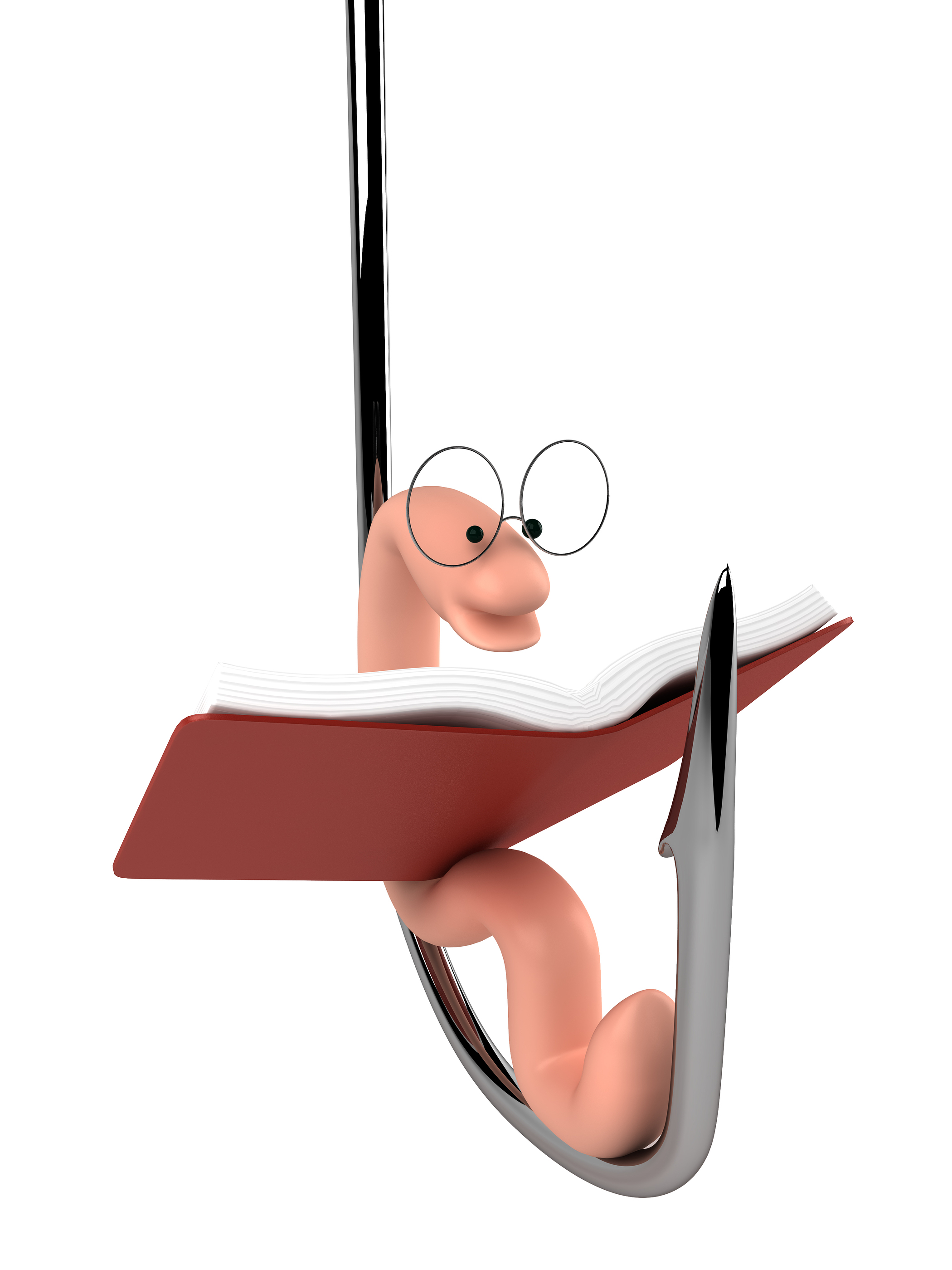
3D rendering of a bookworm Bill character sitting on a fishing hook reading a book.

Want to keep a reader interested in your book?  The first thing you need is a good hook.  You want to draw that reader in with something edgy within the first few paragraphs, but at the very least the first page.  Readers get bored with page after page of back story so it is important to write something that grabs their attention and keeps it throughout the book.

Having said that, the one mistake to avoid here is having a hook just to have a hook.  Make sure it is important to the rest of your story or your readers will jump off the train before you ever roll out of the station.  You don’t want them to get to the middle of your book and say, “what the…?”

Silhouette illustration of a man figure hanging on the cliff

Once you’ve hooked them, you want to reel them in for the rest of the reading journey.  The way I accomplish this is through cliff hangers.  I try to end every chapter leaving the reader wanting more.  One last sentence that just dares a reader to keep going.  Fortunately, I believe I accomplished that with both books in the In Lies Series as people have told me over and over again that they just couldn’t put those books down.  On one hand that’s great, on the other hand they finish it too quickly.  Oh well, you can’t have everything.  Here’s an example from Blood Harvest Moon, a paranormal romance I’ve written:

Derek turned, looking at Shaelyn for the last time. His heart twisted and tears sprang to his eyes, but he just wasn’t ready for this. He just wasn’t. He fled for the stairs.

Try using some cliff hangers, and ask your beta group how well they work.  Or if you want to post some here perhaps my readers will give you some feedback.

Let me know how it works for you.

Posted in Writing Tips | Tagged , , , , , , , , , , , , , | 2 Comments

Example of Swag Items I’ve Used

A whimsical post tonight. My name is Kelly Abell and I’m a bead addict.

Many times readers and other authors ask what I use for giveaways and swag. I make my own. I try to theme jewelry with my books. This one could be themed with The Lost Jewels of Hera as the water elemental and jewel for Hera’s necklace. Check out the full story on my website. http://www.kellyabellbooks.com

I also do earrings as well.  I am able to connect two things I love to do, beading and writing.

Check out this item in my Etsy shop https://www.etsy.com/listing/248520408/sea-turtle-beaded-bracelet

Posted in Uncategorized | 1 Comment

Quality Vs. Quantity In The Self-Publishing World

I read an article in The Huffington Post yesterday that, at first, had me standing up and shouting, “Here! Here!”, then when I’d finished, I was filled with mixed emotions. I’m posting the link so you can read it before you read my thoughts on the matter.

Article by Lorraine Devon-Wilke

Her main point—that you shouldn’t self-publish poor quality—is the part that had me standing up and cheering. I agree wholeheartedly. Having worked as an editor in a previous career, I am saddened when I read a book that is poor quality. I want to give a new author a chance, but when I notice so many glaring things wrong, I just can’t finish the book. I recently read a story by an author I met at a conference. We had discussed the story, so I was excited about the plot. Before I’d finished the first two pages, I found so many editing errors that I wanted to cry. I did mention them to this person hoping he/she will employ a professional editor for her next story. It’s one thing to have a good story, it’s quite another to have a great one. On that point, Ms. Devon-Wilke and I agree.

Here are a few pointers on story quality that  popped into my mind.

  • I know it’s expensive, but save your money and hire a professional editor – not your family member or your English teacher, but an editor that understands the literary industry and how a story should be crafted.
  • Learn your craft – there are so many workshops, classes, and books available about writing that you’re doing yourself an injustice not to use them. Here are a few books I recommend:

Have patience – take the time it takes to craft not a good story, but a great story

    • Let your manuscript rest. Set it aside for a few weeks, returning to it with fresh eyes.
    • In the self-editing process, study your sentences and word choices. Is there a more powerful way to say what you want to say?
    • Study your characters. Are they consistent with personality and behavior?
    • Read the manuscript aloud.
    • Does your dialogue flow or is it stiff and formal?
    • Does your scene setting transport a reader into the thick of the action or leave them flat?
    • When the story is done, the story is done. Don’t add fluff to meet a certain word count.

I could go on and on with the above topic, but I also want to make a few points about quantity. If you can do the above and put out 10 works a year, then do it. I exaggerate slightly, but you get my point. The author of the article mentioned people writing shorts for Kindle and publishing them for 99 cents. I believe she felt that those whom write to the market and churn out shorts to make money hurt the rest of us as authors. If the writing is poor, I agree. I’ve seen some of those Kindle marketing methods where they encourage a person to review what’s hot on Amazon and write about it. They recommend hiring a ghost writer if you can’t do that yourself. I don’t agree with this method, feeling those types of shorts have hurt self-publishing. As for the short story itself? There is very much a market for a good short story or a series of a short stories.

Times are a-changin’. The traditional publishing world has been forever altered by the invention of the e-reader. Busy commuters like the short stuff that they can read on their way to work, in line at the super market, or in the doctor’s office. Many a famous author got their start publishing short stories and still write them. As far as price? It’s what the market will bear. Traditional publishers have to charge a lot for a printed book because they have warehousing costs and returns from bookstores to think about. That’s why it is so much harder to get published with the Big 5. Most agents today won’t look at an author unless they have an established marketing platform to guarantee at least some reader base to buy the book when it comes out. How do you get that? You either write a book that knocks their socks off, or you self-publish great quality, build your audience and let them find you.

I think there is a place for both platforms in the mind of the reader. They will support Indie authors as long as the story is good and professionally produced. They have their Big 5 favorites that they will also follow with religious abandon. Many authors also choose to self-publish because they want to take control back of their artistic license. They want feedback into the cover design, they don’t want their story altered to fit the market, and they prefer to cut out the middleman. I applaud all methods. Do I hope for a Big 5 contract some day? Of course, I do. But I’m not going to hang on to a manuscript for 10 years waiting for that event to occur. I write because I want to please readers. If I can produce a quality self-published work and accomplish that, then I’m okay with that too.

One final point I’d like to make is this… Don’t allow self-editing to paralyze you as a writer. In her article, Ms. Devon-Wilke mentions how it has taken some authors years to produce their work, making sure it is the very best it can be before they attempt to put it on the market or find an agent. I also have met writers who say “it has to be perfect”. While I think putting the work aside and going back to it after a short period of time is necessary, I also believe laboring over a story for a long period of time won’t necessarily make it any better. You get sick of it which could hurt your story, and there is no need to waste your time with that self-editing intensity if you have a good professional editor.

Bottom line, I feel the author of the above article does make some critical points, but you if you produce quality work and study to improve your craft, it really doesn’t matter how many times a year you release a story. For me, I study my craft, write the stories that come to me, have them professionally edited, and let the reader decide.


Posted in Writing Tips | Tagged , , , , , , , , , , , , | Leave a comment

Writing Tip – The Dreaded Synopsis #amwriting

Okay, your manuscript is ready, you’ve mustered up  the courage and you’re ready to submit to an agent or a publisher.  You do your research and you find one or two that you think will be a fit for your manuscript.  You go to their website and read the submission guidelines and THERE IT IS…THE DREADED SYNOPSIS.

You say to yourself, “It just took me a year to right this manuscript and now you want me to summarize a 300 page manuscript into HOW MANY PAGES???”  Okay, before you start to hyperventilate let’s break this down into manageable chunks.  You need to think of your synopsis as the commercial for your book.  This is your written pitch. Your shot at a first impression.  So…You want to make a good one.  Here are a few short tips on writing an effective synopsis.

1.  A synopsis is a short summary of your book so you need to hit the high points.  Don’t get caught in a quagmire of words.  Short and to the point is best.

2.  Keep your character description nice and tight.  Include it within the summary of the book and don’t spend an entire page describing your characters.

3.  Start at the beginning and go ALL THE WAY TO THE END.  Yes, my dear writers,  submission editors or agents do not like it when the author tries to include a clever little cliff hanger and not give away the end.  Folks considering your book need too know how a story ends in order to make a decision on the marketability of your manuscript. They can’t do that if they don’t have the ending.

4,  Keep your adjectives and adverbs to a minimum.  If ever  there were a time for tight writing this is it.

5.  Include the more powerful points of your plot.

To get started try to make a few sentence summary of each chapter.  Then string all that together in a narrative that makes sense.

It is easier than you think once you get started.  Good Luck…

Until next time…Keep On Writing.

Posted in Uncategorized | Tagged , , , , , , , , , , , , , | Leave a comment

Writing Tip – Cleaning Up Word Vomit #amwriting

I believe it was the movie Mean Girls that first introduced this term to me, and I  thought it was an apt description of what I see a lot in the submissions I’ve read.  Word Vomit is a phrase I use to describe a writer who literally spews forth words on the page and then does not go back to clean up the mess.  This is evidenced by the use of purple prose, unnecessary adjectives and adverbs, run on sentences, and endless meaningless dialogue.

When I write my first draft, I do tend to “throw up” all over the pages and let the hands just keep on typing whatever comes to mind.  But in the first round of edits cleaning up word vomit is the first task at hand.  Why use three words when one word will do?  Don’t use the word “was” and my personal pet peeve “had been” to excess.  It throws your narrative into a passive voice and you want to remain active.  If you are using adverbs then in most cases you’ve chosen the wrong verb.  You should rarely have to describe the action of your verb with an adverb.

Don’t get too flowery with your prose.  I had a recent discussion with an agent trying to sell manuscripts and she told me that publishers are rarely taking anything under 70,000 words for a novel and NOTHING over 85,000 words.  Most rejections are due to word vomit.  Clean up those manuscripts, tighten those sentences, make it lean and clean, and I bet you will have more success at getting someone to review your manuscript.  This is hard, I know, but well worth the pain.

Please share your tips for how you clean up your own Word Vomit.

Posted in Writing Tips | Tagged , , , , , , , | 4 Comments

To “CON” or “Not To CON”, That Is The Question #awriting #authors

I’m sitting here recovering after my most successful conference attendance as an author since becoming published. I just got back from Authors After Dark 2o15 in Atlanta, and I’ll tell you it was extremely successful. I met a ton of new readers, which was my entire purpose in going. I met many new author friends that I can learn from, and I made more contacts for my graphics business. Not to mention nearly selling out of the 60 books I took!

Here’s what I like about attending conferences:

  • Meeting new fans – this is the best! You feel like a street vendor, but you get the chance to tell hundreds of readers about your book in your own words.
  • Meeting other authors more successful than me – I steal ideas shamelessly
  • Fellowship with other writers who are my friends  – no one else gets you like another writer – I leave feeling energized and ready to write
  • Getting out of the house for a few days
  • Signing books!

Here’s what I have to think about prior to registering:

  • Will it be worth the money?
    • Conferences are not cheap and you rarely make back all you spend. You have to be willing to get the payback in other ways
  • Will there be high enough reader attendance? I love my author friends, but I am looking to build my fan base of readers.
  • Will there be bloggers in attendance? Never under estimate the power of bloggers!
  • Will I have a decent spot at the signing or be overwhelmed by the headliners? I want to have my table where I will catch the traffic from the headliners as well as not have things so jammed up that my fans can’t get to me. You don’t usually have control over where you are placed, but if I think, based on feedback I’ve gotten from other authors, I’m going to be shoved in a corner, I give attendance more thought.
  • How well promoted is the event prior to attending? You want to work with promoters who are going to be shouting about the conference from every rooftop. The last thing you want is to pay a lot of money and then hear crickets on the day of the signing.
  • Can I be on a panel? I like to pick conferences where I can participate on a panel. Readers and other authors can get to know me better, and I can pay it forward with all I’ve learned in the industry.

There are other things I consider, but I’ve hit the highlights. How about you? What are some of the things you think about as a reader or as an author when you think about attending a Con?  If you know of some really good ones list them in the comments!

In 2015, I set a goal for myself to attend one event per month. So far I’ve hit that goal, but I have to say my writing has suffered. So…I made a decision. From now until the first part of next year, I’m staying put and finishing up those WIPs that keep haunting me. Stay tuned to my website and sign up for my newsletter so you’ll be the first to know about the new releases. I’m shooting for October for a Paranormal Romantic Suspsense Series about 4 brothers who shift into their spirit animals to save their sacred land, and the psychic women who love them. The Guardians of Lobo Canyon!

http://www.kellyabellbooks.com

Here’s the link to sign up for my newsletter in case you missed it.

http://eepurl.com/bogcD

Posted in My Personal Journey | Tagged , , , , , , , , , , | Leave a comment