Writing Tip – Why is Reading For Pleasure Important to the Craft of Writing #amwriting

I was working on a story the other day and spending some time reflecting when an email came in from a fan.  The question asked of me was, “How do you find time to read for pleasure?”  I’ll share with you what my answer was to her.  I make it a point to find the time to read for pleasure.  I think one of the greatest things a writer can do to continue to develop his/her craft is to read!  Reading books in the genre I write is so helpful.  I like to learn about how other authors build their characters, play with word usage in their dialogue,  and craft their plot.  I don’t do this to copy what they are doing, but to learn how to tighten my manuscript and build my writing muscle.

One of the writers I envy the most is Dean Koontz.  I just love the way he paints a picture with words.  He places me right in the middle of a scene, and I can visualize what is going on around me.  He can describe the moon in such a way that I feel I can just reach out and touch it.  I find that learning extremely valuable.  I learn about plot twists and I challenge myself to see if I can figure out what the writer is going to do before they do it.  Many people ask me if that doesn’t ruin reading for me, but it doesn’t.  Especially if I’m spending time with a good writer.

So…read your fiction.  Take time to enjoy reading in the genre in which you write.  You will begin to develop your craft in a way that will surprise you and you’ll have a great time doing it.  :cool:

Posted in Writing Tips | Tagged , , , , , , , , , , | 2 Comments

Writing Tip – Sometimes Simple is Best #amwriting

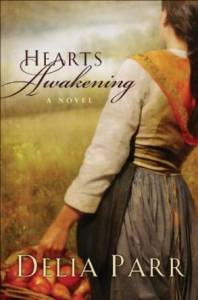
I’m sitting on the porch alone this morning sipping coffee and reflecting on the book I just finished reading. The title is Hearts Awakening by Delia Parr.

Hearts Awakening

I admit when I picked up the book and read the back cover, I was intrigued but skeptical. I assumed I would get bored and move on quickly, but it was such a well constructed novel with intriguing characters that it hooked me from the first chapter. Ms. Parr wrapped me up in the lives of these characters so fast, I didn’t see it coming.

The plot is so simple and pure it made me think. When I’m writing do I tend to over-complicate things by trying to inject too much for my characters to be involved in. Sometimes I make an assumption for the reader that they may get bored or lose interest if I don’t include something else to “wake them up”. Then it occurred to me…if I do a great job with the story the rest is just all useless noise.

If what you are considering adding to your plot moves it along for the reader and adds to the depth of your characters by teaching them a lesson or helping them grow or change in some way, then I think it is worth the add. Otherwise leave it out.

This book was a simple story about two people forced into a circumstance that neither was truly prepared for. It was a sweet romance that had both characters developing along the way with obstacles in front of them right up to the last chapter. Has this type of plot been done before in romance? Yes…thousands of times, but it still works.

So as I sit here and think about plotting the next projects I’m working on, I’ll have Delia’s book in the back of my mind. Well done, Ms. Parr. I’m a fan.

Posted in Uncategorized | Leave a comment

Writing Tip – Stuck on a Scene? Try Changing POV #amwriting

While working on a novel, I got stuck on a scene.  It wasn’t going in the direction I wanted, my characters were two tough guys and were sounding like whiny children, and I just couldn’t get it to work.  My son, an aspiring film maker, was giving me advice, and I was a little amazed at his wisdom.  He suggested that instead of writing from the hero’s point of view, switch the pitch and write it from the villain’s point of view.  “Think like a killer and mass murderer,” he said.  Well hearing this come out of the mouth of my son was more than a little startling, but I did as he suggested.

I couldn’t tell you what a difference that made.  I began to see the action from the villain’s point of view and the entire scene fell into place.  I put myself in the villain’s mind and even indulged him with a brief monologue. The scene took off and I’d finished before I realized I’d started!  Sometimes my brain works like that, in tandem with my fingers on the keyboard until BAM it’s done.  Kind of like driving home and you don’t remember actually driving, you just pull into your driveway and go, “Hmmm, I’m home.”

I guess the moral to this story is, if you get stuck, change whose eyes you are viewing the story through and it may loosen up those trapped words eager to spew forth.

Posted in Writing Tips | Tagged , , , , , , , , , | Leave a comment

Sittin’ On The Porch With Kelly – Author Leigh Michaels – Top Five Ways Historical Writers Go Wrong #amwriting

I am so excited today! I’ve set out the nicest paper plates, made a fresh pot of sweet tea and even tried my hand at some scones. They’re hard as bricks but maybe Leigh won’t notice. (Never claimed to be much of a baker!) Why did I go to all this trouble? I have an exciting guest joining me on the porch. I’ve recently begun my first historical fiction project and I met Leigh through a radio show about writing historical fiction with Marsha Casper Cook on World of Ink Network.  I learned so much that I invited Leigh to share with you some advice on the most common mistakes people make when writing historical fiction. Leigh has over 100 novels published  and also teaches writing classes for the Gotham Writers Workshop.  Now do you see why I’m rubbing my hands together in anticipation?

Okay…tea’s poured, sun is shining, and we’re ready to go, Leigh. Please impart your wisdom to us.

Thanks, Kelly.  As you stated we met on Marsha Casper Cook’s radio show, talking about historical fiction and historical romance. We touched on some of what I’ve learned in decades of research about the Regency period as well as in years of teaching romance writing. Kelly asked if I’d visit on the porch and talk about the most common errors authors make when they’re writing historical fiction – and I’m delighted to be here! 

Top Five Ways Historical Writers Go Wrong

Using modern speech. We’re so used to our ordinary way of talking that modern expressions often slip into our characters’ dialogue and thoughts. While expressions like “Get a grip” and “I haven’t got a clue” are pretty obvious, others aren’t quite so easy to weed out. Like the nineteenth-century character who tells his grandson, “I don’t like the people you’re hanging around with.” Or the narrator of a novel set in 1066 who says, “They took off into the woods.” Or the Regency heroine who says the hero has derailed her train of thought – before trains and rails were commonplace. Or a hero from the 1820s who says, “I didn’t come here to be analyzed like some patient in a mental asylum” – 70 years before Sigmund Freud developed psychoanalysis. A more subtle (but still disconcerting) example is the heroine who says to the hero, “You think everything is all about you, Your Grace.” 

Including modern attitudes. Far too often in romance fiction, people who were supposedly born and reared in the 1300s or the 1500s or the 1800s think and talk and behave as though they just stepped out of Starbucks holding a latte. It’s true that in order to appeal to today’s reader, main characters tend to be more modern in outlook than their real life peers would have been. But when characters don’t even stop and think about it before they spout today’s perspectives on things like religion, lifestyles and women’s rights, or when they display today’s understanding of psychology, hygiene, nutrition, and medicine, it’s tough to make the reader believe they’re real.

Messing up titles. The most common error when it comes to using aristocratic titles is using the wrong form of address, or using multiple forms of address for the same person. Lady Sarah Winchester isn’t the same person as Lady Winchester is. (Lady Sarah is the daughter of a peer, Lady Winchester is Lord Winchester’s wife.) Lord Winchester isn’t the same person as Lord Randolph Winchester. (Lord Randolph Winchester is the younger son of a duke or a marquess, Lord Winchester is the big cheese himself.) Sir James Smythe is always Sir James, not Sir Smythe. When the author doesn’t realize there’s a big difference between variations which seem so small, it’s easy to dismiss the story entirely.

 Not understanding the rules of inheritance. Illegitimate sons could not inherit titles – period. Oldest sons could not be bypassed in favor of younger ones. Daughters could not pass along titles, except for a very few cases by royal decree. Most often, all the land and money was left to the eldest son. I remember an author who made her heroine a duchess… but not by having her marry a duke, which would be the only way for her to achieve that rank. Instead, this heroine got her title because her grandmother, who was the previous duchess, abdicated and bypassed her daughter in favor of her granddaughter. That’s at least three kinds of impossible.

Just plain getting it wrong. Why bother to look it up when we can make it up? It’s tempting to assume that our vague recollection of the timeline is accurate, or figure that if some other historical author used it, we don’t need to check for ourselves.

A few prize-winning examples: The Regency hero and heroine who honeymooned on an ocean liner – decades before ocean travel started to be comfortable. The maid who says to her mistress, “It’s chilly; you should wear your wool kid gloves” – they can’t be both wool and leather. The hero and heroine who run away from a London ball to Gretna Green, arriving there early the next morning – but traveling 320 miles took at least 36 hours in those days. A Regency hero and heroine who get married at St. George’s Cathedral – St. George’s Hanover Square is a simple parish church, not a cathedral.

This trap yawns equally wide for authors writing in other historical periods. Take a Viking romance which refers to potatoes – five centuries before they were introduced to Europe. Or a story set in 1949 where the narrator says, “He passed out after we hit the interstate” – years before the interstate highway system was even proposed.

Some of these things sound pretty obvious when we look at them in a list. But beware – they can sneak up and attack us when we’re not paying attention.

Thank you so much for sharing, Leigh. I’ve already seen one or two things I need to work on. It’s been so much fun having you on the porch. Don’t be a stranger.  You can find out more about Leigh on the Porch Guests Page.

Posted in Uncategorized | Tagged , , , , , , , , , , , , | Leave a comment

Writing Tip – More on Character Development #amwriting

I was conversing with a fellow author last night and the subject of character development came up.  We talked about how we developed our characters with full profiles before we even began to write our novels.  I have about a page of questions that I ask myself, but when she sent me hers I knew I just had to share it with you.  Her profiles are in depth and it shows in her novels.  Her name is Jude Stephens and she writes paranormal romances.  Find out more about her at www.judestephens.com. I’ve read her books and they are a definite Do Not Miss.  After reading her method of character development I can see why her characters are so believable.  I hope you can learn from her methods.  Here they are:

1. Character Name.

2. Siblings? Relationship with parents and siblings? Good/Bad?

3. Where did character grow up?

4. Choose three clubs/sports the character was involved in in high school.

5. What is a quirk (such as spinning hair around a finger when nervous, etc.?)

6. When decorating an apartment, where would your character shop (Pottery Barn or Wal-Mart?)

7. What role does money play in your character’s life (is a 20″ b/w TV just as good as a 50″ flat screen?)

8. What does the character look like?

9. How do you see the character (i.e., sterotype, caricature)

10. Possible conflicts in personality (i.e., likes to watch sports, but hates to PLAY them.)

11. Possible need for change.

12. Values and beliefs (church-going, would the character steal if starving, etc.)

13. How beliefs and values clash (would the character steal if sufficient reason? What is that reason?)

14. What do they need in a mate?

15. Who is the worst person for them to fall in love with?

16. What makes the character emotionally dangerous (seeing someone strike a child, etc.?)

17. What is it about the character that makes it impossible to simply “walk away” from the crisis of the plot?

18. What does the character most admire about their best friend?

19. What drives the character insane about their best friend?

20. How does the plot help the character learn a lesson or grow?

21. What is the error in thinking during the plot (thought they could trust someone, so didn’t spot danger?)

22. Why did they think this?

23. As a result of this mistake, what do they need to learn?

24. What is keeping them from learning it?

25. What are the ways the character tries to “cheat” to keep from having to grow?

26. What event in the external plot forces the character to either grow or change?

27. What is your character’s greatest fear? (afraid of the dark, commitment, spiders?)

28. What is your character’s greatest secret?

29. What is your character’s best childhood memory?

30. What is your character’s WORST childhood memory?

Now you may look at these and say HOLY COW!  I know I did, but for all the right reasons.  These are questions that build  a better character and help you if you are writing a series and need a reference point.  I for one have these saved and have them ready to go for my next novel.  Please share your thoughts on character development as well.  Thanks for sharing, Jude.

Books by Kelly Abell     Promotional Materials by Select-O-Grafix

Copyright 2015 by Kelly Abell

Posted in Writing Tips | Tagged , , , , , , | 3 Comments

Marketing Effectiveness: What’s Worked For Me #amwriting #bookpromotion

In all the years I’ve been an author and involved in the publishing business, I’ve tried just about every form of marketing. I’ve done online marketing through Twitter, Facebook, Goodreads, Google+, Pinterest and more. I’ve done virtual blog tours and launch parties. I’ve paid for advertising and a few times I’ve paid for a review (I do not recommend this). I’ve also done live events at libraries, conventions, and set up my own book signings. Below, I’ve summarized what I believe to be the effectiveness of each method.

Twitter: Great for getting your name out as an author. It is a great way to connect with readers and other authors (who are also readers). Can also set up TWEETS ahead of time through various online sites. More effective if you interact at least once a day. Thank people for following, engage in a conversation about books, etc.

Facebook: Gives your readers a place where they can interact with you. Don’t use it as a sales vehicle but as a hang out for your readers to visit. Post interesting things about you as an author…how you choose your character’s names, tidbits about your work in progress, what you feel you can safely share about what you do when you aren’t writing. NOT effective as a sales vehicle.

Online Promotions such as Launch Parties, Cover Reveals, Etc.: Not effective for me, but I know others would disagree. It is an effective way to reach out to new readers. Be prepared to have giveaways available. People love free stuff.

Pinterest: A great way to reach a new audience. Post pictures and teasers here. Make sure you include your buy link on each post.

Paid Advertising: Never found this to be effective unless you can afford to take out ads in magazines that readers read for book reviews. Very Pricey.

Personal Appearances such as Book Signings, Conventions, Book Clubs, etc: This has been the most effective method for me. There is nothing better than getting face to face with your readers. My book sales jump each time I do a personal appearance. It is expensive so you’ll need to budget and pick and choose what will be the most effective for you and the genre you write.

Marketing can be time consuming and frustrating. My recommendation is:

  • Have a well done website and keep it updated
  • ALWAYS have bookmarks or business cards with you WHEREVER you go and tell people that you’re an author (If you need these items visit http://www.selectografix.com. They can help)
  • Create a Facebook Page and use it to interact with readers – not spam about your book
  • Have a Twitter account and stay active with following and interacting with your followers
  • Do at least one personal appearance per month – libraries, independent book stores, book clubs, author/reader conventions, craft fairs
  • WRITE WELL, WRITE CLEAN, WRITE OFTEN – put out great quality writing whether you are an Indie or seeking an agent/publisher; Continuously improve your craft; Write as often as you can, and do so not for the money, but because you love it.

Would love to have you share what works best for you!

Books by Kelly Abell     Promotional Materials by Select-O-Grafix

Copyright 2015 by Kelly Abell

Posted in Self-Publishing Tips | Tagged , , , , , , , , , , , | Leave a comment

Writing Historical Fiction – Some Tips #amwriting

Good Morning,

My current work in progress is my first attempt at writing historical fiction. I must say it is far more complicated and involved than I possibly could have imagined. Recently, I was fortunate enough to participate on a radio show where the guests were Leigh Michaels and Mary Ann Bernal. Leigh Michaels you may recognize as a popular Harlequin Author who writes Regency Romance and Mary Ann Bernal writes during the Viking Era in England. Both have a great deal to share on things to think about when writing historical fiction. Things you really wouldn’t pay attention to that are so critical to writing in that genre.  Take a few minutes and listen to the show then let me know your thoughts.

http://www.blogtalkradio.com/worldofinknetwork/2015/05/06/historical-romance–a-good-story-is-a-good-story-host-marsha-casper-cook

If you have tips of your own please comment here, or if you’d like to be a Guest on My Porch just let me know. I’m interested in learning as much as I can.

Have a productive day, my friends.

Posted in Writing Tips | Tagged , , , , , , , | Leave a comment

Dealing with Plot Problems #amwriting

In trolling around the internet I often read other articles about writing. One can never learn enough about improving one’s craft. I found a series of articles that I’d like to share with you. They were written by Author Therin Knite. I’ll post the links and you can pop on over to her blog and follow her as well.  Have fun and let me know what you think of the articles. I found them helpful. Thanks Therin for letting me share.

Part 1 –http://tknitewrites.com/the-9-worst-types-of-plot-fails-part1/

Part 2 – http://tknitewrites.com/the-9-worst-types-of-plot-fails-part-2/

Part 3 – http://tknitewrites.com/the-9-worst-types-of-plot-fails-part-3/

Posted in Uncategorized | Leave a comment

Sittin’ On The Porch With Kelly – Author Sylvia Villalobos – My Writing Journey

Good Morning To All!

It is gorgeous on the porch this morning. Not too hot yet, but it will be later. It’s hot enough for my famous sweet tea and Author Sylvia Villalobos and I are sippin’ away. It is so great to have Sylvia with me today and she will be talking about her writing journey. New writers, pay attention, she has some great information to share. Let’s listen…

The road to publication is full of bends, climbs, and descents — a sinuous path of joy and heartbreak. Mine was no different. Now that my mystery novel, Stranger or Friend, is out in the world (well, on amazon, thanks to Solstice Publishing), I can sit back for a moment, share the story behind the story, and reflect on what I’ve learned along the way. 

The Story Behind Stranger or Friend

Inspiration rushes at us like a storm of jagged images when a story must be told.  Such was the case in the writing of this mystery novel — the culmination of two lives at a confluence of cultures: an Eastern European immigrant — the author — married to a California native of Hispanic descent. The result is a highly fictionalized story, an observation, of intersecting cultures, of newcomers and locals, the bumps along the way, discovery, rejection, and acceptance. This is the story of a woman going back home, only to find that home is no longer the place she remembers, or maybe never really knew.

My Writing Process

I usually start with two elements: setting and character. I give the character goals, motivations and conflicts (internal and external). The external conflict is particularly complicated by the world she lives in, hence setting is important.

I had somewhat of an outline for Stranger or Friend — mostly names, events, and a timeline. As I put chapters through my critique group, the characters expanded, especially the villain, whom I had well defined in my mind’s eye, but needed to make certain this also came across well for the reader.   

Before Publication

Learning from rejections is part of the process. Working on one’s art and craft every day is not only rewarding, but crucial. Reading, in and out of preferred genre, and joining a critique group is essential, because writing is one thing and writing well is something else entirely.  

Marketing

This part will make your head spin, but with organization, it can be done.

Build your name brand (Twitter, Facebook, etc.). Put together a Media Kit or Press Kit. This includes your bio, bibliography, cover art, photo(s) and links, all in one document. More on this below.

Do you have a blog? If you’re reading this, the answer is probably yes. A writer without a blog cuts herself way short. Post interesting articles, stay active within the blogging community. This will come in handy for blog tours. Look into organizing signing events in your area. What about the local radio and newspapers? Many outlets love to support local authors. I know because I have a radio interview scheduled with my local station. This is when you will need a Press Kit. Editorial sites and radio stations expect a Press Kit. Get creative. Marketing is not only a way of doing, but a way of thinking in our service-driven society, as marketing books will tell you. 

Why do we keep submitting ourselves to this endless struggle, one might ask?

Because the story matters. Because there is little that comes close to the satisfaction we feel while in the creative process.

Sylvia, I couldn’t agree more. If you’re writing for anything other than the pure joy of the story, then you’re in for some frustrating times. Getting published and growing your readership is hard and takes time. Seems like you’ve learned some very valuable lessons along your journey. Thank you for sharing your journey with us. For more information about Sylvia please visit my Porch Guests Page.

Posted in Sittin' On The Porch | Tagged , , , , , , , , , | Leave a comment

Writing Tip – When To Use Prologues #amwriting

I was having this discussion with a fellow author today and thought it would be a great topic for my next tip.  To help my discussion along I looked up the definition of Prologue on www.dictionary.com.  This is what they have as the definition.

–noun

1. a preliminary discourse; a preface or introductory part of a discourse, poem, or novel.

2. an introductory speech, often in verse, calling attention to the theme of a play.

3. the actor or actress who delivers this.

4. an introductory scene, preceding the first act of a play, opera, etc.

5. any introductory proceeding, event, etc.: Appetizing delicacies were the prologue to a long dinner.

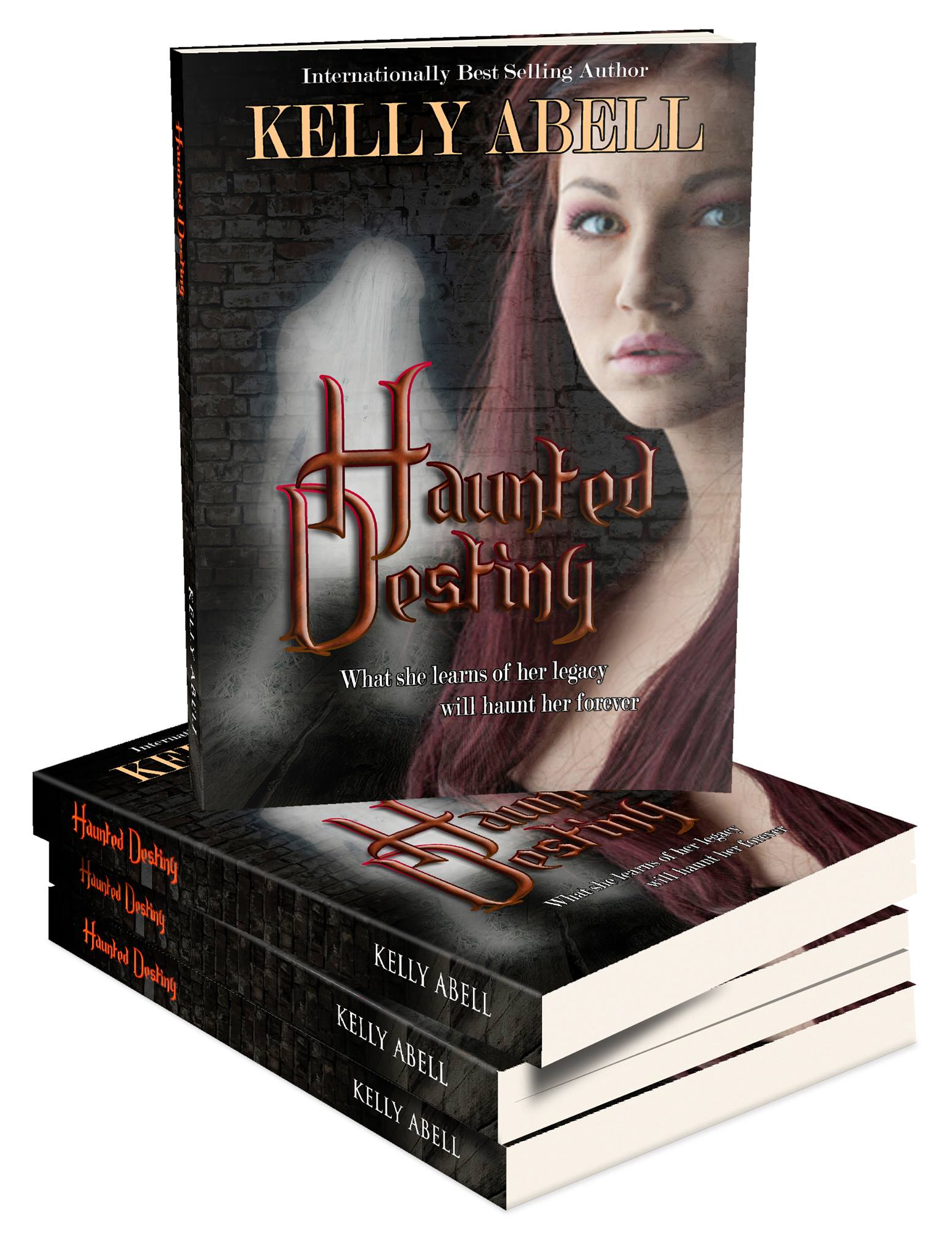
Now that we know what it means when would you use one.  I would be careful with a prologue and not let it be confused with the first chapter of your work.  If you are trying to truly introduce something that will be separate from your main story, but explains something that relates to the story then I would use a prologue.  For example, I use a prologue in my novel Haunted Destiny.  In the main part of the novel, Amy (antagonist) receives some furniture that is haunted by a trapped ghost and the demon who is holding her.  In order to explain how the furniture became haunted, I used a prologue set back in the 1800’s with completely different characters than appear in my novel.  The prologue explains how the furniture becomes haunted.  Then the first chapter is in modern times introducing the main character Destiny Dove and how she comes to live in a new town with a strange grandmother.

10918711_839448876101916_510296753_o

If you find yourself writing a prologue that is about the main characters in your book, you probably don’t need it.  I would just turn that into your first chapter instead.  A prologue is truly something that precedes your story -something that comes before.

Many agents and publishers do not like them so I’d proceed with caution.

Please add your thoughts and ideas on when to use prologues.

Posted in Writing Tips | Tagged , , , , , , , | 1 Comment