Putting On Your Online Suit – Complaining Authors by Barbara Vey

I happened to read this as a post on Facebook today and thought it was appropriate to share here. As an author you need to remember that you are viewed by your readers as a professional. Social media is a great forum for spreading the word about your books, but remember who your audience is when you want to rant about something. Everyone who reads a post by you has the potential to buy something you’ve written. Remembering this is important when you’re upset or irritated. The last thing you want to do as an author is tick off the very people that read your work, which could be ANYONE.  Just like you wouldn’t stand up in an office and air your complaints or frustrations, you shouldn’t do it on social media. The person who does, is the one who ends up looking unprofessional.

Barbara Vey makes some great points in this post that I thought were worth sharing.

http://barbaravey.com/2015/04/13/authors-please-stop-complaining/

Her contact information is below if you’d like to learn more about her.

Posted in Put On Your Online Suit | Tagged , , , , , | 1 Comment

Sittin’ On The Porch With Kelly – Author Ralph Peluso – It’s All About the Journey

Hey Folks. I’m a little late getting this one out today but it will be worth the wait. This afternoon I’m sittin’ on the porch with Author Ralph Peluso.  He shares with us his journey through writing and what he’s learned along the way. Let’s listen:

My passion to create stories was hidden deep inside me for over 40 years. Originally I went to college to study sports journalism. Sadly, I sold out that dream for money, majoring instead in finance.

In 2008 and 45 years into a business career, the passion for creative writing still burned. As the fire re-kindled, I created series humorous short stories about vacationer incidents entitled “Jersey Shore Fever and Other Seaside Maladies.” Writing was rewarding, especially when the editor approved each story for publication. Wow, just the encouragement I needed to tackle a much bigger project.

 In August 2009, I began research on the story I always wanted to write about the greatest baseball player of all time, Babe Ruth. The seeds of this novel were planted when I was 6. Growing up in the Bronx, my dad introduced me to baseball through a 13 inch black and white TV and 1956 World Series. As we huddled tightly near that small box watching the grainy player images, I was a hooked, Yankee fan forever.

Italian- American families have a tradition; Sunday dinner at grandma’s, followed by hours of loud discussion; debating any topic imaginable. Between April and October, the discussion was baseball centric.  I quickly garnered a knack for debating the merits of Babe Ruth, the greatest ever; against uncles, cousins and friends; they favored Italian players or the stars of the 60’s.

With so much written about Ruth, my story needed a fresh angle. I discovered a different Ruth than depicted and I thought existed. Despite everything written about him, people really know very little of him. The challenge was creating a plausible story.  I told my family the book would be completed by Christmas of that year.

When I put the pen down it was February 2014!  Writing an historical fiction required an intense and more exhaustive research than I thought. I had completely underestimated the time needed. But, I discovered that although the research provided facts and background for the scenes and the stories within each chapter of the book already existed inside of me, many coming from my own life experiences.

The writing journey led to an unforgettable personal experience meeting Julia Ruth Stevens. The passion for her father was still very present. This was truly a once in a lifetime opportunity.

Patience and flexibility became mainstays in the experience. Many times I started down a path only to find the research did not validate the contemplated story line; I learned to let the story evolve changing path was not a bad thing.

Manuscript in hand I had my book!  Simply hand it to the editors; within a few days I’d have finished product back. Wrong, the editors made it readable, verifying facts, a valuable process to maintain suspension of disbelief.

I discovered many things during the writing process; never give up on your passions, it is hard work, and everyone near to you takes pride.  Keep writing the juice is worth the squeeze.

I love that last line. I so agree that the juice is worth the squeeze. Thanks for sharing your journey, Ralph. It really helps me because I’m working on a historical fiction right now, and I’ve found a lot of what you say is so true.  If you want to learn more about Ralph, please visit my Porch Guests Page.

Posted in Sittin' On The Porch | Tagged , , , , , , , , , , | Leave a comment

Sittin’ On The Porch With Kelly – Author Frank Allan Rogers – Editing Your Own Work

I am so thrilled to have Author and Editor Frank Allan Rogers back on my porch. I’ve worked with Frank for years and highly respect his advice. Today, over sweet tea and crumpets, we are talking about editing your own.  Pay close attention!

Here’s a definition of expert you may have heard before: An ex is a has-been, and a spurt is a drip under pressure. Since I don’t want to be a has-been drip under pressure, I won’t call myself an expert. But I worked as a paid staff writer, editor, and then senior editor in the publishing department of a Michigan company for nearly 18 years. In a company filled with “experts” in all aspects of publishing, even the dumbest of newcomers learn a few things. If I can pass along something I learned that will help fellow writers, it’s the least I can do; I got help many times (and still do) from others.

What is a writer? From the time we are young children, we learn to make symbols and put them in a sequence that represents what we are thinking – hopefully. As we grow and learn and practice, we get better at it – hopefully. Some of us are fascinated by what these symbols can do: inform, inspire, motivate, entertain, even change the world. The pen really is mightier than the sword, but only for those who know how to use that pen to affect others.

When we write to entertain, we often create whole new worlds filled with extraordinary characters and fascinating places. The first test of our creation may be the response we get from family and friends. But we soon learn there is a world of difference between writing that brings kind words from friends and relatives, and a tale so good that thousands of strangers will pay to read it. So, editing becomes a vital part of everything we write.

Editing our own stuff is always tougher. Since we already know what’s there, or what we think is there, it’s easy to skim, and overlook things that are obvious to others. But I can share some tricks I picked up over the years that have helped me. If you use a scientific approach, you can be a lot more objective, and less likely to get caught up in the story as you edit.

 Make a list of all your bad habits (bad writing habits, that is). Be honest. Nobody’s gonna see the list but you. Then go through your manuscript looking for only one item on the list. For example, I often use the word that where it’s not needed, as in: Fred thought that Jane would like…   MS Word will flag every that in my story to make it easy for me to check each one.

 When you’re looking for thats (or whatever) and see something else you need to fix (and you always will)  highlight it and keep going so you don’t lose your focus. Go back and fix it later. 

 Always use spellcheck, but remember it can’t catch everything. It doesn’t know the difference between desert and dessert. Also, check from and form, common typos that spellcheck won’t catch.

 I know it sounds nerdy, but diagramming a sentence (remember that from high school?) can help you figure out how to say something when you get stuck. What’s the subject, the verb, the object? When you look at the mechanical construction of a sentence, it gets much easier to manage.

 Write in the active voice, NOT passive. It’s BORING. Make a global search for the words was and were  in your sentences. Those two often suck the life out of our prose. Instead, use verbs that express action or strong emotions. And be suspicious of adverbs. Those “ly” words are often crutches for weak verbs. Instead, use a verb with more impact. 

Show. Don’t tell. We hear that a lot. But top-selling authors often say, “Tell 20% and show 80%.” I like this quote from Anton Chekhov –  “Don’t tell me the moon is shining. Show me the glint of light on broken glass.”  

Look for all these things in separate passes through your first draft—or second, or third—and watch your writing improve faster than you thought possible.

When you’re done with self-editing, should you still have an editor go through your manuscript? ALWAYS.

This is awesome advice. I couldn’t agree more. This combined with a few of the other posts on my blog should have your manuscript in tip-top shape.

Find out more about Frank on my Porch Guests Page.

Posted in Sittin' On The Porch | Tagged , , , , , , , | 1 Comment

Brush Up On The Basics #amwriting

I recently read Steven King’s On Writing.  In a section of the book called Tool Box, he talks about basic grammar.  This is something that I really hadn’t given much thought to as I always thought I had a good grasp of the English language.  I can write complete sentences and string together reasonably coherent paragraphs, but I’ve never really given much thought to “The Rules”.  All those long words that describe the parts of a sentence and words like participle never really enter my mind as I’m writing.

In previous posts I’ve referred to the Little Brown Handbook, an excellent resource for the basics in grammar that no writer should be without. I think I need to revisit my old friend and brush up on some of the basics.  I write well, but will revisiting some of the Rules of Grammar make my stories fantastic?  Steven King seems to think so, and I think I agree.  Can an author take some license with the rules and fill a paragraph with short one or two word sentences to emphasize what is happening to a character or with a particular scene in a story?  Yes, but to a point.  It must be coherent to the reader who, I might add, has also studied the English language and will be quick to yank the rug out from under you if you go too far out of the box.

My opinion is basic grammar is very important and also the correct use of words in the correct context.  Use of a word like “irregardless” is inexcusable if a writer wants to be taken seriously.  Here is a note from a popular site www.dictionary.com:

Usage note:

Irregardless is considered nonstandard because of the two negative elements ir- and -less. It was probably formed on the analogy of such words as irrespective, irrelevant, and irreparable. Those who use it, including on occasion educated speakers, may do so from a desire to add emphasis. Irregardless first appeared in the early 20th century and was perhaps popularized by its use in a comic radio program of the 1930s.

It may have become common practice but if you look at the word under the basic rules it makes no sense.  Neither does using “your” when you mean “you’re” which  is also a common mistake I see and tend to commit from time to time.  From what I’ve found in both my writing journey and my editing experience, it’s the little things that will trip you up.  Making your work stand out among the vast sea of wannabe authors is critically important and you need every tool you can carry.

I have to agree with Steven King!  Brush up on the basics.

Posted in Writing Tips | Tagged , , , , , , , | 3 Comments

Sittin’ On The Porch With Kelly – Author Fran Orenstein – A Fold In Time

It’s a little breezy on the porch today, and somewhat cooler here in the Sunshine State. But that doesn’t stop Author Fran Orenstein and I from sharing some sweet tea and a wonderful story about her past. Let’s listen:

Yesterday I felt as though space had folded in on itself and opened a doorway to the past. Having recently moved across country, I knew from past experience that something always disappears in every move. Sometimes they are replaceable, often they are unimportant, and sometimes you really, really need them. This move I lost years of tax returns. Everyone says they are somewhere, and I hope that’s true, but meanwhile every nook, cranny and box is getting checked multiple times. I’m still looking for those tax returns and in reality know they could be in “the box that never arrived”, although why they would be packed with the missing light bulbs, batteries and kitchen utensils is beyond me. However, for those of you who have ever moved, strange things happen in the midst of chaos and stress.

But as I digress, the search revealed a hidden treasure I never remembered existed. I pulled down a plastic bin from atop a shelf in the closet, ignoring the complaints of my back. It was marked “Kid’s Stuff”, meaning drawings, report cards, greeting cards and anything considered memorabilia of my children’s childhoods. Ready to dismiss this as the location of the sought-after tax returns, I nevertheless pawed through, just in case insanity had attacked during packing.

What I did find was a treasure trove of history…my history…my writing history, saved oh those many, many decades ago by my mother. I found the first poem I had ever written at age eight and a plethora of poems and short stories written between eight and twelve. I even found a copy of the short story I had sent to McCalls magazine at age twelve, about a girl who couldn’t buy a dress for her graduation, called The White Dress, which I thought I had torn up in a pre-adolescent fit of angst when the rejection letter came. Note: That was March. They published a similar story with the same title three months later in June. That, dear readers, was my first foray into the evil side of publishing. If you thought I was angry in March, imagine how I felt in June when that magazine issue arrived on the doorstep.

Reading all the poems, stories, and even the tiny book with illustrations, I felt proud of this little girl who was able to write a plot, use mature language, dialogue with correct structure, and develop characters. It became apparent that I was greatly influenced by books I had read and my poems sounded like book reports for Bambi (the first poems I ever wrote) and The Prince and The Pauper. Younger Fran even made the same typo mistakes Elder Fran makes today…it’s instead of its. At least I’m consistent even after six decades.

I believe that early reading and storytelling with a child is vital to developing an understanding of the structure of books, language usage, content and storyline. My mother was a storyteller, and I wish she had written down the stories she told me. I grew up at the library accompanying my mother on her bi- or tri-weekly trips, for reading was her favorite past-time. I must have also been born with a muse living inside my head that made it easy to imagine and create with language, art, and music.

My children also spent their childhoods from infancy at the library, and all are excellent writers; my daughter’s poems published in her teens and a son writing epic poems and lyrics for his music. My grandchildren were raised with books from infancy, and proud Grandma needs to brag that all but the three-year-old have won poetry and writing contests as pre-teens, been published, and my six-year-old grandson, at age five wrote a Haiku that will soon be published in an anthology of children’s poetry. Watch out for the littlest one, though, he’ll be next as soon as he masters reading and writing.

So for parents out there and potential parents who may be reading this blog, please save your children’s creative pursuits, for you never know long after you have passed when they will open a plastic bin and find their past.

Thanks for sharing that Fran. I too spent many hours at the library and reading with my Mom. Some of my fondest memories of are us on the couch reading together. If you’d like to learn more about Fran and her books, visit my Porch Guests Page.

Posted in Sittin' On The Porch | Tagged , , , , , , | 1 Comment

Sittin’ On The Porch With Kelly – Author Din Ka – My Journey From Screenplays to Novels

Good Morning Y’all! Yep, it’s that time again. It’s just gorgeous on the porch this morning. In fact, it’s downright hot! I’m sitting here with Author Din Ka, and between flaps of the fan I’m holding and chugs of sweet tea –He seems to be fine–we are talking about his journey from writing screenplays to novels. Let’s listen:

Much of what I’ve learned about writing stemmed from my early screenwriting days. Through the handful of unproduced and dust collecting screenplays I’ve written, it unknowingly carved a path that led me towards a passion and love for writing novels.

I was told my screenplays were to descriptive and needed to be more consolidated, precise and straight to the point, and how it read and had more of a novel feel to it. I didn’t know what that meant at the time, so I ignored the criticism, taking it personal rather than constructive. But as time wore on I eventually realized what they were trying to say. To write novels!

So I did. I began to tackle my first novel, “Where Tomorrow Waits,” which was in its infancy as a screenplay at the time. And by the time I finished the first chapter, I started to feel that writer’s high, that moment where I told myself this could actually work, people might actually read this. With each chapter I’d finish, the high grew stronger and stronger, and threw that strength I realized that writing novels was my calling.

My first novel taught me a lot about my own writing, what I was hoping to achieve and what emotions I wanted to draw from it. The emotions I thought I wanted turned out not to be true, and halfway through the story, the rawness and crudeness of it started to reveal itself with an overwhelming sensation. It no longer was a story of survival, but rather instead became an emotional story about the estimated millions of innocent lives lost during the Khmer Rouge Regime told through the eyes of a survivor.

Sounds like an interesting self-discovery, Din. I’ve had the same experience when trying to write a screenplay. I’m just too wordy. 🙂 Oh well, maybe you and I will just stick to what we do best. Thanks for joining me on the porch today. You can find out more about Din Ka on my Porch Guests Page.

Posted in Sittin' On The Porch | Tagged , , , , , , , , , | Leave a comment

Sound Editing Advice #amwriting

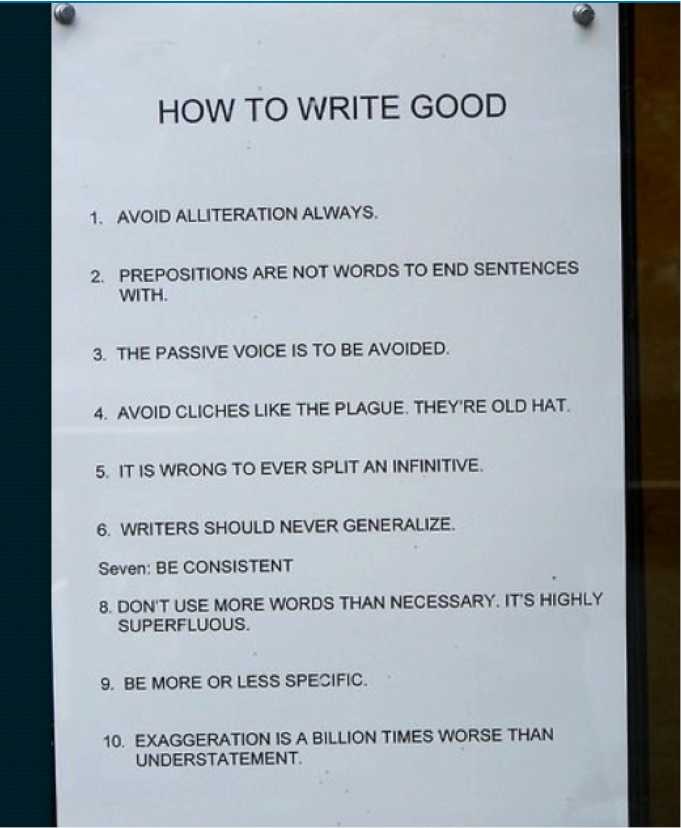
Saw this picture on Facebook today and thought your would enjoy it. Some good advice! 🙂

Grammarhttp://www.kellyabellbooks.com

Posted in Writing Tips | Tagged , , , , , , | Leave a comment

To Self-Publish Or Not To Self-Publish #amwriting

I thought I’d take a moment to share with you what I’ve learned about authors who choose to self publish instead of going with a traditional or small press publisher. I think there are pro’s and cons to both sides, and I would love to have your thoughts on this topic, so please weigh in.

The advantages to self-publishing are:

  • You maintain control of all rights
  • You choose where your book is sold and at what price
  • You remain in control of your story and how you want it to be viewed by your audience
  • You can put your book up for sale when you are ready and not have to wait many months for the sometimes painful editing process with a traditional publisher

The disadvantages to self-publishing are:

  • It can be expensive
  • MUST pay for professional editing on your own – this is critical if you want credibility as an author
  • Must do all the promotion on your own – can be time consuming but fun if you enjoy doing it
  • It can be difficult to make a profit in a short period of time (which is true of both avenues)
  • Must hire someone or be able to design your own book covers
  • Must hire someone or be able to format your document to meet all the requirements of the different sites where you put your book up for sale

I have done both and have a great deal of experience in the publishing industry. I’m fortunate in that I own a company that does formatting, covers, and promotional materials. I don’t have those expenses, but when I do self-publish, I pay for high quality editing.

If you are running tight on funds and have a great deal of patience then you may choose to submit to an agent or a small press. If not, and you want to dip your toe in the water of self-control, I applaud you. Just make sure you book looks professional. The last thing you want to do is jump in the vast sea of all these self-published authors and not have your book be able to stand out, or draw bad reviews for sloppy editing.

It’s a personal choice, but one that deserves a great deal of thought.

Comments?

Books by Kelly Abell     Cover Designs, Interior Design by Select-O-Grafix

Copyright 2015 by Kelly Abell

Posted in Self-Publishing Tips | Tagged , , , , , , , , , | Leave a comment

Notes From My Editor – Lessons Learned #amwriting

Looking back on working with my editor for Mara’s Passion, a few things came up that I wanted to share with you. No matter how long you’ve been writing you always learn something new when you go through the editing process. Below are some of the mistakes I made, even after going through the manuscript before I sent it to her. Lesson learned? Patience, Grasshopper. Take the time you need to polish and polish again. There is such a thing as “over-editing”, but I do believe taking the time to really look hard at your work even before you send it to an editor is so worth the time.

I’m a little vulnerable here because I’m sharing with you some of my own mistakes, but if you learn from them, then I’ve accomplished the goal of this blog. Read this excerpt from my editor’s email to me about some pre-edits that I should have done before I sent it to her. Doing this made the second half of the process go so much faster. And…I’ve learned more ways to prep my manuscript next time. Hope you learn something as well.

You need to go through and do some pre-edits upfront because they’re slowing the process down (and you’re gonna have to do them anyway). 

-ly words — 846. Try to cut to 1-2 per page (or less!) 

that — 825. If the sentence works without it, cut it (including in dialogue). Just makes the story read smoother.

now — 127. Now is a present tense word used in past tense verbiage. Delete/revise out as many as possible (dialogue is okay to stay if you like) 

as – 300. Cut to 1-2 uses per page. As often throws events out of order and can also create “impossible” events. Ex: He swallowed the last bite as he walked down to the corner. (um, hoping that corner is just a few feet away, otherwise that’s a mighty loooong swallow. ) 

and – 1624. Please don’t try to get rid of all of these. However, this high a number indicates that there is little sentence variation. Ex: He opened the door and let her in.  => Opening the door, he let her in.

Sentences should have a varied rhythm to them. If it’s a repetitive rhythm, readers fall asleep or set the book aside. But if you can create a “poetry” type cadence, then readers get swept up in the story and read longer. 

Note #1: Try to eliminate as many overuses of names as possible. If it’s just a guy and a girl, he and she work great. 

Note #2: As you start each chapter, ask yourself, is the reader grounded in this scene? Does the reader know where these characters are? Are my characters interacting with their surroundings or are they just talking? No one really ever sits still and just talks. People are always moving and doing things. Having coffee? Yep, they are sipping and wrapping their hands around the mug to warm their hands. In a car? They’re looking out the window, fiddling with the radio, digging through the glove compartment (well, at least my boys do… <wg>). You get the idea. Don’t let where they are just be a page long description. Boring! Let the room unfold a little at the beginning, then have the characters “work” it to let the reader know what everything looks like, feels, smells, and tastes like. Let the reader experience the setting along with your characters. 

All of this will probably take you several passes through. You can’t really edit words out and ditch adverbs for stronger verbs and still do a good job at eliminating overuse of names…not to mention getting the characters to interact with what’s around them. Two of those are your editor hat, the other is creative hat. The two don’t mix well! LOL


Hope this was valuable for you. If you have anything to add that you’ve learned along the way, please share.

Posted in Writing Tips | Tagged , , , , , , , , | 1 Comment

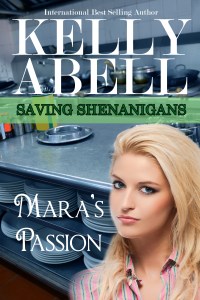
New Release! Mara’s Passion – Book Three in the Shenanigans Trilogy

Indulge me if you will. I’d like to share with you my new release – Mara’s Passion. It is the third book in my Saving Shenanigans Trilogy. I have grown to love these characters so much and in a way I’m sad to see this series come to a close. But there are more characters in my head screaming to get out, so I’ll indulge them for a while.

Here’s the blurb and a snippet. Hope you enjoy. I’ll put the buy links at the bottom!

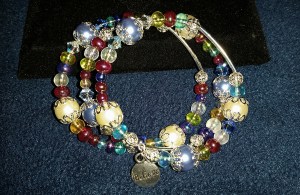
I’m giving away a free bracelet  – which is featured in the book. If you buy a copy put your confirmation number in the comments and you’ll be entered into the drawing. It goes on through the entire month of March.

Saving Shenanigans Mara final

At eighteen, Mara O’Banyon drove to New York, determined to become a chef. As the luck of the Irish would have it, she was discovered by world-renown Executive Chef and restaurant mogul, Jacques Bernaut. Under his tutelage, she soars to stardom in his restaurants, even surpassing the skill of her mentor/lover. But when her father dies, she returns home to attend his funeral and remembers what it was like to have family. On visiting the family pub, Shenanigans, ideas of how to create a fabulous menu swirl in her mind…if only she can get past the sexy but stubborn Jake O’Leary, the current cook/bartender. The man is trouble with a broad-shouldered, handsome-faced, hot capital T.

Jake has worked at Shenanigans since he was released from the county jail. A self-trained chef, he’s built the bar’s menu into what it is today. The last thing he needs is some New York-trained chef to boss him around in his own kitchen—no matter how gorgeous she might be. However, it isn’t his kitchen. It’s hers. When attraction flares the first day they cross knives in the kitchen, he falls for her—hard. He just needs to make her see he’s better than her fancy French boyfriend in New York. Easy right?

When Mara returns to New York to settle her affairs, she finds Jacques isn’t so willing to say good-bye. To her shock and dismay, he holds her hostage with not only his iron-clad contracts but with threats to her family as well. Mara wants to break free, but at what cost? When Jake learns of her desperate situation, he’ll do anything to save her. But will his interference lead to dangers neither of them could have foreseen?

In this Kindle new release Saving Shenanigans series you witness the wits and determination of the third O’Banyon sister, Mara, as she tries to free herself from the demons of her past and tries to build a future including love and trust. Mara is one of three inspiring women in this series as she gains confidence and personal growth toward reconciling what it means to be loved. Mixing a secret past, the mob, and an insane chef is a recipe for mayhem.

Mara's Passion

The story behind the bracelet involved Jake wanting to show Mara he is committed to her and he wants her to do what the charm on the bracelet says…Believe in him. She’s got some trust issues, so you’ll just have to read the book to see what happens.

Don’t forget to enter your confirmation number to win that beauty.  Watch for more giveaways to come!

Posted in Uncategorized | 1 Comment