Writing Tip #7 – The Importance of Character Sketches

This week, as I was writing, I thought a lot about my characters.  I’m currently writing the third book in my trilogy Saving Shenanigans. My concern, of course, is to stay true to those characters as they were in the first two books and to allow them to stumble and grow. How do I keep it real? How do I keep their behavior consistent with how the reader would expect them to act?

The answer is Character Sketches. Before I begin writing, I develop a character sketch of each character that I know is going to be in the book. On an Excel Spreadsheet I document the following:

Physical Description – All the way down to shoe size. It’s important to have a picture in your mind of what you want your character to look like.

Current Mental Status – How is my character feeling about him or herself at the beginning of the book – Do they like themselves as a person? Are they proud, happy, sad, depressed, murderous, etc.?

Goals – What are the goals for each character in the book: What are they after? Where do they want to end up? This helps determine whether they are a true antagonist, protagonist, sidekick, etc. Based on your story line, what do you want this character to strive for? What should each achieve?

Personality Traits – In this section, I would write down what my character’s hot buttons are, what makes them laugh, how driven are they to finish a small task; are they neat, sloppy, in-between? These are important things to know about your character as you progress through your story and reveal aspects of the character’s personality. If you reveal that he is pretty laid back in the beginning of the book and he’s placed in a stressful situation in a later chapter, you certainly wouldn’t want him to FREAK out. It would not be true to what the reader would expect. Try to think of all types of situations that your character would be confronted with in your story and how this particular character would react. Remain true to that.

Development – How do I want the characters to develop as the story evolves? Do they learn a hard life lesson? Do they become someone totally different than who they were before? Do they stay the same, resulting in the same boring lifestyle they have always had? You see where I’m going with this. What draws a reader into a character is how much they change or grow during the course of the book. Make sure your main character has some kind of change that will draw your reader in. Otherwise your characters will turn out flat and boring.

Those are the four main categories I use in my Character Sketch. These really help me as I think about how I want my characters to evolve, react to situations, and how I want them to dress and behave.

Books by Kelly Abell     Cover Designs by Select-O-Grafix

Copyright 2014 by Kelly Abell

Posted in Uncategorized, Writing Tips | Tagged , , , , , , , , , , , | 1 Comment

Sittin’ On The Porch With Kelly – Author/Publisher Margo Bond Collins – On Being Indie #amwriting

Today I’m sittin’ on the porch with Margo Bond Collins, author and publisher extraordinaire. We’re sipping on some sweet iced tea and talking about Margo’s journey from author to publisher. She has some great insight we can all learn from. Let’s listen…

Indie Publishing. It means a number of things these days, from self-publishing to publishing with a small press, to publishing with a bigger publisher that still isn’t one of the Big Five.

I’ve never thought of myself as entrepreneurial. In fact, if anyone had asked me two years ago if I wanted to start my own publishing company, I would have laughed. I didn’t want to publish. I just wanted to write.

But then I became a published author.

Don’t get me wrong—I love the publishing companies who have published my books. I wouldn’t change a thing about my experience with them. In fact, I have sequels planned for several of those books and have every intention of continuing to work with those publishers.

But this is a rapidly changing business. Go to any writers’ conference, and you’ll hear it over and over—the publishing business has changed more in the last eighteen months than in any other time in its recent history. And the more I learned about the business, the more I knew I wanted to explore some of its flexibility by publishing some of my own books.

Moreover, in my day job, I’m a college professor—for many years now, my job has been to teach other people the things I’ve learned. So I knew that I also wanted to be able to share what I learned about indie publishing.

And thus Bathory Gate Press was born. Our mission statement includes helping new authors learn to navigate the indie publishing business should they want to do so. In every acceptance letter, we note that we welcome authors who want to build a long-term career with us and authors who want to move from BGP to either self-publishing or another, bigger publisher. Right now, I am helping mentor one author as she is developing her first self-published book, even as I am editing her first novel with our press. We also have authors who have told us quite clearly that although they will of course work to market their books, they have no interest in ever self-publishing.

So I find myself thinking a lot these days about not only writing, but publishing and marketing, as well—and if I had just five things to share about this business in general, I would tell new indie authors this:

1. Network. I would never have been able to do the publishing work I’ve done in the last year, either as an author or as a publisher, were it not for the people I’ve met in the business. For me, this has meant going to conferences and joining online groups, making connections, and maintaining contact—I know that anytime I have a question, someone I know will have the answer.

2. Keep up with trends. This may be the most difficult element of the business for me—because it changes so quickly, so do the trends within it! What’s hot one moment (the New Adult genre, for example) can become over-crowded in an instant.

3. Don’t be afraid to try your own thing. Just because you’re keeping up with the trends doesn’t mean you have to follow them! Also, don’t be afraid to keep doing your own thing, even if it fits into a trend. Ten years ago, an agent told me that vampires were “over.” Then Twilight came out.

4. Be flexible. If something new comes along, be willing to try it. Try new marketing strategies, new publishing platforms, new programs, new advertising opportunities.

5. Be patient. But don’t change everything you’re doing every time something new comes along, either. For example, when Amazon changes the way they do things, the doomsayers arrive. Kindle Unlimited will be the death of us all, some of them wailed just a few months ago. Right now, I’ve got some books in KU, some books out of it, and I’m gathering as much information as I can about how it seems to be influencing sales. But in order to do that, I need to be willing to risk leaving those books where they are for a while in order to see what happens. Above all, I think it’s necessary to remember that this is a long game.
Ultimately, though, the very best thing any author can do is work to craft the career he or she wants.

Thanks for the chat, Margo. We can learn a great deal from all you’ve shared with us today.  Find out more about Margo on our Porch Guests Page.


Posted in Sittin' On The Porch | Tagged , , , , , , , , , , , , , | 1 Comment

Dissecting a Publishing Contract – Part 3 of 4 – What are Some of the General Terms in a Publishing Contract? #amwriting

Today I’m welcoming back attorney Kathryn Goldman who discusses some of the general terms in a publishing contract, part 3 or her 4 part series.

In last week’s post, we examined the Author’s Warranties provision in a traditional publishing contract—What are the Author’s Warranties in a Publishing Contract?

This week, we’re going to take a look at various general terms which are found in many contracts, not just publishing contracts. Each term has an impact on the relationship between an author and publisher.

Here’s the text of general terms of contract from an actual publishing contract [the contract language is in black, my comments are in blue and not part of the contract]:

Terms of Contract.

a) Term. This agreement shall be for seven (7) years from the effective date of the contract and will terminate automatically. All publication rights will then revert back to the author. The author is free to resubmit their book to ABC Publishing Inc. or any other publisher at that time.

What you need to know:

  • This is a sunset clause. The contract is over at the end of seven years. This is a key provision. A specific time limit in a publishing contract is important. Publishing contracts should not last forever.
  • A time-based limitation is concrete and not susceptible to manipulation like a sales velocity clause in which a writer can request reversion of her rights if sales fall below a certain level.
  • A time-based limitation is particularly important with on-demand printing and “never out of stock” ebooks. With current technology, reversion of rights based on the notion of the book being out of print is meaningless.

b) Tax Withholding. It is mutually agreed that State, Federal, and Foreign taxes on the Author’s royalties are solely the responsibility of the Author. Author is an independent contractor and not an employee of the Publisher.

What you need to know:

  • This provision should serve as a reminder that you are in business. The publisher will issue you a 1099 in January reporting the royalties paid to you in the previous year. You will be responsible for paying taxes on those royalties. The publisher will not be withholding taxes for payment on your behalf.
  • Because you are an “independent contractor” and in your own business, you need to keep good records. Remember that all business related expenses are deducted from your gross earnings at tax time reducing your taxable income.

c) Title Change. A change of title of the Work does not void this contract.

What you need to know:

  • This provision cuts both ways. You cannot change the title of your work just to get out from under your contractual obligations and shop the work to another publisher.
  • Similarly, the publisher cannot change the title of the work then reopen negotiations on royalties, length of the license, or anything else in the contract.

d) Bankruptcy. If for any reason the publishing company files for bankruptcy protection, ceases to conduct business, or makes an assignment for the benefit of creditors this agreement shall become void and all rights granted herein will revert back to the Author.

What you need to know:

  • Rights reversion in the event of the publisher’s bankruptcy is a key provision and I recommend that it be included in any license agreement that you sign.
  • If the publisher goes into voluntary bankruptcy or is forced into bankruptcy by its creditors, your copyrights revert to you and do not become part of the bankruptcy estate to be sold by the trustee to the highest bidder.
  • This provision benefits the publisher, as well. If the publisher’s entire stock in trade, its licenses, reverts to the authors if bankruptcy proceedings are initiated, creditors are less likely to force the publisher into bankruptcy. All of the publisher’s assets would disappear and there would be nothing left for the creditors.

e) Arbitration and Venue. This agreement shall be governed by the laws of the State of WhereverThePublisherIs. Any controversy or claim arising out of this agreement or the breach thereof shall be settled by arbitration in accordance with rules then obtaining of the American Arbitration Association and judgment upon the award may be entered in the highest court of the forum, State or Federal, having such jurisdiction. Such arbitration shall be held in the City of XXX, State of YYY unless otherwise agreed by the parties.

What you need to know:

  • This is the “choice of law” provision I referred to in the December 1 post. Laws are different in each state. Here, you are agreeing that the law of a state other than your own may apply to the terms of the contract.
  • This is also where you give up your right to a trial by jury or even in front of a judge by agreeing to arbitration.
  • Arbitration tends to favor larger corporations over individuals and filing a complaint in arbitration is more expensive than filing a lawsuit.
  • Arbitration is faster than litigation, normally.
  • If there is a dispute with the publisher, the arbitration will take place wherever the publisher is located, which is something else that can run up expenses if you have to travel.
  • I recommend including a provision that encourages a good faith attempt at resolution of any dispute and perhaps mediation before resort to a complaint in arbitration.

f) Notice. Any written notice required under any of the provisions of this agreement shall be deemed to have been properly served by delivery in person or by mailing the same to the parties hereto at the addresses set forth above, except as the addresses may be changed by notice in writing, provided however, that notices of termination shall be sent by registered or certified mail.

What you need to know:

  • Make sure you keep your address current with the publisher
  • Keep track of where the publisher is if it moves its offices.

g) Assignment. This agreement shall be binding upon and shall inure to the benefit of the parties hereto, their successors, assigns, executors, administrators, and/or personal representatives and may be assigned by either party hereto, except that no assignment by the Author shall be valid against the Publisher unless the Publisher has received written notice from the Author and has consented to the same in writing.

What you need to know:

  • This is a problem provision. In it, you are agreeing that the publisher has a right to sell (“assign”) this contract and all the licensing rights that go along with it.
  • This is a problem because it means that you can start a relationship with a publisher only to have your contract sold to some other entity and you have no say over it. You may not want to be in business with that other entity.
  • The publisher likes this provision because it allows them to be bought by a larger publisher.
  • I recommend that this provision be negotiated so that the contract cannot be assigned by either party without the other party’s consent. That way you have control over who your business partners are.

h) Waiver. A waiver of any breach of this agreement or of any terms of conditions by either party thereto shall not be deemed a waiver of any repetition of such breach or in any wise affect any other terms of conditions hereof; no waiver shall be valid or binding unless it shall be in writing, and signed by the parties.

What you need to know:

  • This means that if you (or the publisher) let a breach of the contract go uncorrected, that doesn’t mean you’ve given up your right to enforce the next breach of the contract.

i) Entire Agreement. This Agreement and any attachments hereto constitute the entire agreement between the contracting parties concerning the subject matter hereof. All prior agreements, discussions, representations, warranties and covenants are merged herein. There are no warranties, representations, covenants or agreements, expressed or implied, between the parties except those expressly set forth in this agreement. Any amendments or modifications of this agreement shall be in writing and executed by the contracting parties.

What you need to know:

  •  The entire deal is in this contract. Period.
  • Emails from the publisher saying, “Don’t worry about it. We’ll work something out,” mean nothing. Unless it is in the contract, it is unenforceable
  • If the publisher is promising you something and it’s not in the contract, have them put it in there. Otherwise, there is no promise and you cannot rely on it.

GoldmanReduced

Just a reminder, while I am a lawyer, this post is not legal advice on any specific contract. It is an attempt to educate you as to what the terms of a contract mean so you can decide whether you should negotiate for something different. Remember, nothing is standard.
In January, we’ll take a look at the non-competing works clause in a publishing contract.

Kathryn Goldman is a lawyer who protects writers, artists, filmmakers, and businesses from having their work and art ripped off. Since she’s a lawyer, she has to mention that she’s not *your* lawyer (so this article isn’t technically legal advice, just educational), but you’re still invited to download her Digital Artists Rip-Off Protection Report. You can also follow her on Twitter @KathrynGoldman

Posted in Analyzing A Publishing Contract | Tagged , , , , , , , , , , , , , , , | Leave a comment

Sittin’ On The Porch With Kelly – Author Missy Turner – Musings of a Debut Author #amwriting

It’s a bit nippy here again in the Sunshine State, but that still doesn’t stop me from sittin’ on the porch with some of my favorite authors. It’s a cuppa joe kind of day, so I’m sitting here with debut author Missy Turner. She’s about to experience her first release and was sharing some of what that’s like with me.  Let’s listen…

“My name is Missy Turner and I  am an Author.” Words I have always wanted to say.  Now I actually can. Somewhere out there in the world, is a story that I created and my editors, at Solstice Publishing, painstakingly repaired so it would make sense.

So as a debut author, what have I learned? I would like to say everything, but that would be too broad of a statement. So let’s just say I know more now than I did when I began. Let me break it down:

screaming guy

See that screaming head guy? That is me when an awesome idea comes into my head and it just has to come out. So I grab a paper scribble down ‘the idea for the best story ever’ and at some point begin to type it out. Spell check it. Plot-holes check it. Bada-bing, bada-boom. Send it to my editor.

Now when the editor receives my story it probably looks something like this:

scribble

Then she somehow turns it into this:

quill

So here is what I have learned:

  • Writing has almost as many rules as math. To learn them you have to practice, practice and practice some more. (Ice writing hand and repeat.)
  • Your editor is your best friend, when she gives you suggestions, take them willingly. As rough as you think your editor is on you. The people paying money to read your work will be even rougher.
  • Develop a thick, discerning skin that can absorb constructive criticism. The thick skin is so that unfavorable reviews will bounce off you. You have put yourself out there. People will judge you. You have to be able to tell the difference between the people trying to help and the people trying to bring you down.
  • You have to be prepared to market yourself. The hard work begins after your book is published. You have to get your name out there and get noticed.
  • Fellow writers and Editors in Chiefs are a wealth of information. They give great marketing advice and I found most of them are supportive and willing to help you

All in all it’s been a wild exciting whirlwind. I can only speak from my own limited experience, but if you are reading this now, don’t be discouraged. The book selling, the lobbying for readers, the relentless search for reviewers,Oi, it’s exhausting. Remember this. You wrote a book! YOU WROTE A BOOK AND IT WAS PUBLISHED. Congratulations. First time is always the hardest. Take all the hard lessons you have learned from this and use them to make your next project that much better. 

Keep your head up and remember the words of Ernest Hemingway:

hemmingway

Thank you for having me on your porch swing, Kelly. It’s back to writing for me.

Thank you, Missy. You’re insight as a debut author is amazing. Thanks for sharing it with us today. You can find out more about Missy on the Porch Guests Page.

Posted in Sittin' On The Porch | Tagged , , , , , , , , , , | Leave a comment

Where Story Ideas Come From – Screaming Characters In Your Head #amwriting

Good Morning! It’s 6:30 am on a chilly Friday morning, and I’m sipping on my coffee, trying to figure out what to write about today. Oh sure I’m working on a novel right now…the third book in my Saving Shenanigans Series, Mara’s Passion, but there are these annoying characters that keep screaming in my head, “Write my story! Write my story!”

Revolution, people protest against government, man fighting for

Does that ever happen to you as a writer? Do you ever wake up in the morning with these people, you’ve never met, inside your head, begging you to write their story? If you do, don’t call the local mental hospital. Grab a pen, find a quiet place and write down what they say. You are not crazy. You’re a writer. (At least that’s what I tell myself, and will until the men with white coats come to cart me away in a straight jacket.)

Crazy cartoon guy in a straight jacket. Vector illustration with

To someone who doesn’t write, this idea may truly sound a little insane, but there are times when a story idea grips you so hard, you can either hear it, or visually see it playing out in your mind. Take advantage of those times. Whether you want to call it your muse, or not, it is the creative part of your brain struggling to express itself.

Many times, I’ve ignored those voices, and lived to regret it. I’ll try to go back and capture the moment and the essence of the story, and it just won’t come back. Therefore, I keep a notebook with me at all times. You’ll never see me without one, or with one in my car, on my nightstand, or lying in various rooms about the house. That way, when I’m facing a bit of writer’s block, I have a plethora of ideas to choose from.

Tell me about the craziest place you found yourself when the idea struck. What did you do?

Books by Kelly Abell     Cover Designs by Select-O-Grafix

Copyright 2014 by Kelly Abell

Posted in Where Story Ideas Come From | Tagged , , , , , , , , , | Leave a comment

Self-Publishing Tip #5 – Building Your Author Brand Series – Cover Reveals #amwriting

Continuing along with our Building Your Author Brand series, I’d like to take a moment to speak about a way to announce a new release that you have upcoming. A Cover Reveal is a simple ad placed on social media sites which announces the cover of your book to your current and potential fans. Most of the time there is very little verbiage and just the cover as the main focus of the ad.

A Cover Reveal can do a few things for you:

  1. Introduces your upcoming release to your fans
  2. Gives you a photo ad that you can share all over social media, other than the site where you originally post it
  3. Bumps up the hype and excitement about your upcoming release
  4. Gets the word out to readers before your book is actually on the market
  5. Can serve as an ad for pre-sales on Amazon or Smashwords

How soon before the book is released should you do a cover reveal? I’d say a good rule of thumb is about 2 weeks prior to the release. And I wouldn’t stop with just the one post. Each day you should post the ad in a different place. You don’t want to wear people out with it, but you are proud of your new creation and should let as many people know as you can that it is on its way. Many times this will stimulate comments on your blog or website which you can respond to and keep the hype going.

There are many promotion specialists around that you can hire to do a Cover Reveal Ad for you, and many of them will also do some type of launch or continuous promotion for you prior to the book release. Ask around to see who other authors have used and liked. Select-O-Grafix, LLC also does a Cover Reveal service for the ridiculously low price of $10 for a two month ad. Your cover is broadcast all over our social media sites once a week for that period of time. That allows you to still get the word out even after the book is released.

In my opinion, Cover Reveal ads are a great way to begin the hype about an upcoming release. Take advantage of the service and adding that in combination with some teasers (spoken about in a previous blog post) will go a long way to get your reader interested in your book.

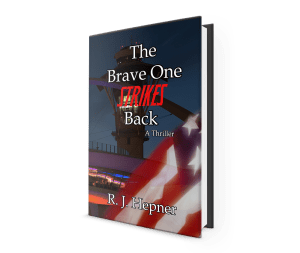
Here is an example of what a Cover Reveal ad might look like:

Brave-One-3d

Cover Reveal for this roller coaster ride of a story from Author Ron Hepner. Release date #/##/####. Click on the cover to buy your pre-release copy now.

Building your brand is the most important thing you can do as an author. It is how readers can find you and serves as a first impression for them to fall in love with your books. Use this and the previous tips to help you along the way.

I’m always interested in other things you may have done which has helped you build your brand. Please share so we can help those who follow in our footsteps.

Until next time…

Books by Kelly Abell     Cover Designs by Select-O-Grafix

Copyright 2014 by Kelly Abell

Posted in Uncategorized | 1 Comment

Dissecting a Publishing Contract – Part 2 of 4 What are the Author’s Warranties in a Publishing Contract? #amwriting

Today I welcome back Attorny Kathryn Goldman for Part 2 of our 4 part series on Dissecting a Publishing Contract.  Take it away, Kathryn!

In last week’s post, we examined the Grant of Rights provision in a traditional publishing contract—What is the Grant of Publisher Rights in a Publishing Contract?

This week, we’re going to take a look at the promises an author makes about her work. These promises are generally referred to as warranties.

Here’s the text of an author’s warranty clause from an actual contract [the contract language is in black, my comments are in blue and not part of the contract]:

Authors Warranty. The Author hereby represents and warrants to the Publisher the following:

a) He/she is the Author and sole owner of the work, or has been assigned exclusive rights to the work.

What you need to know:

  • You are the owner of any work you create.
  • You do not have exclusive rights to any work you did not create (such as images or song lyrics, for example) and which you may have used in your book, unless you purchased those rights.
  • If you did purchase rights to any portion of your book, that purchase of rights (also called an assignment) must be in writing signed by the creator of those pieces of work.
  • In order to include the work of others in your book, the rights you secured must be the same rights that you granted the publisher in the Grant of Rights provision we discussed last week.

b) The work is original and no part of the work was taken from or based on any other literary, dramatic, musical, film, or graphic arts, except as identified in the writing by the Author.

What you need to know:

  • This is the provision in which you are declaring the originality of your work.
  • You are stating that you have not developed your story as a derivative of anyone else’s work.
  • Keep in mind that this notion of originality applies to any rights to work you may have purchased to include in your book. So, if you did buy someone else’s work to include in your book, make sure that they give you a warranty of originality in the assignment.

c) The work does not infringe upon any copyright, privacy rights, rights of a third party, or any common law or statutory law.

What you need to know:

  • The promise that you did not infringe anyone else’s work is the flip side of the warranty of originality—it’s like a belt and suspenders from the publisher’s perspective.
  • The promise that you are not invading any privacy rights or rights of a third party means:
    • You aren’t intruding on anyone’s seclusion (telling secrets about a person that not everyone knows, for example);
    • That you haven’t used the name or likeness of another person without their consent; or
    • You haven’t depicted anyone in a false light by attributing to them offensive characteristics, conduct or beliefs which they do not have.
  • The common law or statutory law phrase is in there as a catchall. You are promising generally that your work isn’t breaking any laws.

d) The work does not contain any material of a libelous or obscene nature.

What you need to know:

  • Defamation which is libel and slander are potential problems if you are using real people in your fiction. For an in depth discussion you can refer to this post: A Fiction Writer’s Guide to Using Real People in a Story.
  • Obscenity is a slippery concept. Depending on your genre, you may need to negotiate this out of the contract

e) The work is not in the public domain, and has not been published in any format with any company that may still own such rights to the work.

What you need to know:

  • The publisher wants to be sure that no one else can publish this work.
  • This is different from originality. This is about exclusivity, the publisher wants to be the only entity to offer your work to the public.
  • This is the provision that makes serializing your work on a blog in order to build an audience before finding a publisher problematic. If you had done that, the work would have to come off the site.

f) The Author holds the full power of Authority to grant these rights.

What you need to know:

  • This sentence means that you are who you say you are and you have the rights that you say you have.
  • Basically, you cannot contract away that which you do not own.

g) If this work has been previously published in any form, the Author warrants that the rights granted herein have been reverted to her/him. As an addendum to this agreement the Author shall provide a written memorandum documenting the reversion of the rights granted by any publishing company that may still own proprietary right to the work, along with documentation from the previous publisher stating that all rights belong to the Author, if such documentation is requested by ABC Publishing.

What you need to know:

  • As with paragraph (f), this goes to exclusivity.
  • The publisher does not want to spend time and money producing and marketing a book only to be in competition for the same market with someone else.

h) If a judgment is obtained against Publisher for usurping rights still controlled by a Publisher or other entity other than the Publisher or the Author, the Author agrees to hold the Publisher harmless and to indemnify the Publisher for damages and costs. If Publisher prevails against a suing party or resolves the matter by an out of court settlement, the Author will be liable to indemnify the Publisher for defense and settlement cost.

What you need to know:

  • This is where you are putting your money where your mouth is. If you fail to control the rights to your work and there is someone else out there with the right to publish your work, you may end up paying for that broken promise.
  • The key here is to carefully monitor all of your contractual obligations. If you’re slicing and dicing rights to your work as we discussed last week, you need to keep track of which rights you’ve granted and to whom. Good bookkeeping is paramount.
  • Consider negotiating this clause so that:
    • Any indemnity is limited to the amount of money paid by the publisher to you for the particular title at issue (that will cap your risk, limit your potential exposure);
    • The publisher cannot settle any claim without your consent (you are in a better position to determine what may be a bogus claim); and
    • You have the right to participate in the defense of the claim being brought including picking the lawyer (if you have to pay, you want to keep the costs down).

i) Author agrees to hold Publisher harmless and indemnify the Publisher against any claim, demand, action, suit, proceeding or any expense whatsoever, arising from claims of infringement of copyright or proprietary rights, or claims of libel, obscenity, invasion of privacy, or any other unlawfulness based upon or arising from the publication or any matter pertaining to the work.

What you need to know:

  • This is the liability clause for other promises you have made in the contract. If any of the rights, claims of originality, privacy protections, etc. that you promised in the earlier paragraphs turn out not to be true, or yours, or you violated in some way. This is where you pay the publisher for any problems your broken promises may have caused.
  • Again, consider negotiating this clause so that:
    • Any indemnity is limited to the amount of money paid by the publisher to you for the particular title at issue (that will cap your risk, limit your potential exposure);
    • The publisher cannot settle any claim without your consent (you are in a better position to determine what may be a bogus claim); and
    • You have the right to participate in the defense of the claim being brought including picking the lawyer (if you have to pay, you want to keep the costs down).

j) Author warrants and represents that to the best of Author’s knowledge and belief, all statements of fact contained in the work are true and based on appropriate and diligent research.

What you need to know:

  • If you are representing something as a fact in your work, you have done sufficient research to support your contention that the fact is true. The true fact provision.

k) Author warrants that he/she will not hereafter enter into any agreement or understanding with any person or entity that would conflict with the rights granted to the Publisher during the term of this contract.

What you need to know:

  • This is where you promise not to grant rights to any other person or publisher that conflict with the rights granted in this contract.
  • If you are dividing up your rights to create multiple revenue streams, you need to pay careful attention. Monitor your rights and keep good books.

l) The author will not, without the written consent of the Publisher, write, print, publish or produce, or cause to be written, printed, published, or produced, during the continuance of this agreement, any other edition of said Work or any work in any form of a similar character or title tending to interfere with or injure the sale of the Work in any manner.

What you need to know:

  • This provision needs to be deleted if you have divided the rights to your work as we discussed last week.

Remember Contracts are Negotiable

Next week we’ll discuss another provision in a traditional publishing contract.

GoldmanReduced

Kathryn Goldman is a lawyer who protects writers, artists, filmmakers, and businesses from having their work and art ripped off. Since she’s a lawyer, she has to mention that she’s not *your* lawyer (so this article isn’t technically legal advice, just educational), but you’re still invited to download her Digital Artists Rip-Off Protection Report. You can also follow her on Twitter @KathrynGoldman


Posted in Analyzing A Publishing Contract | Leave a comment

Sittin’ On The Porch With Kelly – Author David K. Bryant – Taking a Unique Look At A Classic #amwriting

Today I’m joined on the porch by an author who’s traveled all the way from England! That’s a long way to go for a glass of sweet tea, but I’m so glad he came. David K. Bryant is a peach of a guy, and I just couldn’t stop talking to him. His book, Tread Carefully On the Sea has a unique story behind it. We got so into our conversation that it turned into an interview.  I’m no Katie Curic, but it was a fun visit. Let’s listen…

Can you tell me how you came to be an author? Has it been an easy or difficult journey?

It’s a journey I didn’t know I was going to make. I spent my career in journalism and public relations, writing reams of stuff for other people. During that time I made one attempt at a book, a pirate story. Many years later I read it to my young son. Then in about 2010 when he was in his twenties he asked to read it again. I was ashamed to give him the sub-standard original so I set about re-writing it. It became Tread Carefully on the Sea, which has now been published by Solstice. It’s my first published book – at the age of 68.

What motivates you as an author?

This should be a simple question to answer, but it’s got me stumped. Hoping not to sound trite, I think I want to produce something that people will enjoy. I want it to be good in terms of making sense, being exciting, having some originality and a believable set of characters. I think it’s important to create characters who readers can associate with, feel their emotions, understand their faults – and like.

How do you deal with rejection and setbacks as an author?

I think I can boast that I deal with them well. I approached 370 literary agents with Tread Carefully on the Sea. But I wasn’t going to give up until there was nobody left to try. Then I started sending to indie publishers who took direct submissions and Solstice took me on. God bless Mel Massey-Maroni (my editor-in-chief).

How do you deal with writer’s block?

While it’s very frustrating, I think you have to wait. All of a sudden when your mind is totally elsewhere, you’ll get an idea of how to continue your story. I think it’s worth always carrying a notepad around and writing down thoughts whenever they occur to you. And if you can’t write at that particular moment because you’re driving or something, then keep repeating the idea inside your head so you don’t forget it.

Do you have any motivational books or websites which you find useful from time to time?

I am so glad there is a thing called Wikipedia because it answers so many questions. Motivational books – The Odyssey, one of the oldest bits of literature around. It’s about a guy who spends ten years encountering all the dangers of reality and fantasy yet he never gives up.

Who has been the biggest influence upon your writing?

My dear brother Ray. He helped me get into journalism and he was an author himself. His main work was published in the 1980s and is still available from Amazon. It’s called Warriors of the Dragon Gold and is based on the Bayeux Tapestry. Ray died far too early.

Tell us about a typical day for you. Do you have any special routines which you strictly keep to?

I’m retired so my time is my own and a lot of it is spend hitting the keys I’m hitting now. I make a conscious effort not to leave my wife an ‘author widow’. But she’s very understanding and helpful with the books.

How have family and friends reacted to you as an author? Are they supportive?

Yes, they are supportive. They make constructive suggestions and have stopped me falling into a few traps.

Do you have a muse? If so, please could you tell us a little about him/her?

No, I don’t think so.

Going forwards as an author, what do you realistically hope to accomplish?

Recognition for being good. I’m not being conceited and saying I am good, but I would love the world to judge me so – and enjoy my work.

David, tell us about quickly about your book, since it is such a unique story….

I was seven years old or thereabouts and I walked round the garden reading Treasure Island. When I got to the bit about the musket and cutlass battle I was so engrossed I walked into a tree. I was proud of my bleeding nose – I imagined I got it in a fight with a pirate.

What intrigued me most about that classic book by Robert Louis Stevenson were all the references to Captain Flint, a pirate king who was brutal, intimidating and quite likely an alcoholic – yet obviously very clever.

Without Flint there would have been no Treasure Island for he was the man who had buried the Treasure on the Island. Yet in that book we hear about Flint only in reminiscences from some of the protagonists because Flint is dead by the time the story begins.

Stevenson’s narrative tells us Flint took six men ashore with him to stash the loot. But, having apparently murdered the others, only Flint came back to the ship, giving him the security of being the only man who knew where the cache was.

There had to be a story around that. For me, Flint deserved a biography of his own. What’s more, it should answer all those other questions posed by Treasure Island. If, as Stevenson tells us, Long John Silver had lost his leg in the same broadside as Old Pew lost his ‘deadlights’, what were the circumstances of that broadside? And how come that Billy Bones, the first mate, came into possession of Flint’s map where X marked the spot of the buried loot?

It’s taken me a long time but now I have supplied my own answers. I hope you enjoy them and I hope you identify with the experiences of the other characters I’ve created when you read Tread Carefully on the Sea.

Wow! Can’t wait to read that one. Thanks for coming all the way across the pond to join me on the porch today. It’s been a lot of fun. 

You can find out more about David on my Porch Guests Page.

Happy Saturday to you all.

Posted in Sittin' On The Porch | Tagged , , , , , , | Leave a comment

Writing Tip #6 – The Importance of Research #amwriting

If I were to ask you the question, “How important is research as a writer,” you would probably look at me like I had 12 heads. “OF COURSE research is important,” you would say, AND you would be right. Yet, so many authors do not take the time to research their books properly. We get all excited about the creative process and forget that we need to verify facts, figures, and locations. Yes, we are writing fiction, but it needs to be based on truth and facts in order for our readers to take that journey with us and feel they’ve not been led on a wild goose chase.

When I wrote Sealed In Lies I spent countless hours researching the hierarchy of the FBI, the CIA, Secret Service, Navy SEALS, Columbia, guns, locations, and the list goes on and on. I wanted to capture those readers who have experience in those areas and make sure that my story was credible. Did I get it all right? I’ll let the readers be the judge, and probably not, but I did put forth a great deal of effort. Our readers put a lot of energy following along with us in a book and they not only want to be entertained but they also want to learn something. If we can impart some type of knowledge or facts about a person, place or thing that we are writing about, then their money for the book will be well spent.

There are a million places to do research, but the Internet is probably the most handy. Because it is handy, you should be wary and try to verify your facts from multiple sources. Some of the most useful places on the Internet for location research are Chambers of Commerce websites, Google Maps, county websites, etc. The more you know about your setting, the more real it will seem to your reader, and place them right in the middle of Main Street. Of course the best way to research a location is to visit it. My second book, Haunted Destiny, is set in Arcadia, FL, a small town in the south central part of Florida. I actually traveled there for work and was enamored by the rural charm and decided this would be a great place to stage a novel. You want to pick some authentic places or events that occur in the town and use them to your advantage and weave them into your story.

The library is another great place for research. I checked out books on the CIA, FBI, Navy SEALS, and so on to help me be authentic right down to the type of weapon a Navy SEAL uses most often in what situation. Get to know your local librarian, because if there is one thing they are good at, it’s research. They can be so helpful and they really like helping authors.

For the sequel to Sealed In Lies entitled Captured In Lies, I am including bombs as the main weapon of the antagonist. What do I know about bombs? Absolutely nothing. I was wary about researching them on the Internet because I didn’t want the FBI showing up at my door to confiscate my equipment! SO, timely as it was, I read an article in my local paper about the Tampa Bay Bomb Squad. I emailed the reporter and got the phone number of the Bomb Squad Commander, which she happily provided. After I mustered my courage and my questions, I gave him a jingle. He was MORE than helpful. He would not tell me how to disarm or build a bomb (wonder why??), but he patiently answered my questions and gave me so much information that it changed the direction of the plot. I realized how ridiculous my main idea was because I didn’t have enough knowledge about bombs. I was amazed at how easy it was to contact him and how willing he was to help me. Don’t be afraid to ask for help from an expert. Many times if you tell them you are an author and need some help, most people are very willing to share their knowledge and expertise.

Because this has already rambled on, I want to mention one final thing. Your local bookstore has some really outstanding reference books that should be a part of every author’s library depending on the genre you write. I will mention one that I have and I would love to see comments on books that you own that help you in the research process: The Crime Writer’s Reference Guide by Martin Roth.

Feel free to share some of your best research tools. I’ll look forward to reading about them.

Books by Kelly Abell     Cover Designs by Select-O-Grafix

Copyright 2014 by Kelly Abell


Posted in Writing Tips | Tagged , , , , , , , , , , , , | 2 Comments

Dissecting A Publishing Contract – Part 1 of 4

Did you ever wonder what exactly all that contract language actually means in your shiny new contract offer you just received from a publisher? Today I’m joined by my new friend and intellectual property lawyer, Kathryn Goldman.

Kathryn  represents writers, artists, filmmakers, and businesses, protecting them from having their work and art ripped off. Over the course of the next four weeks, she will share a series of posts explaining common provisions in traditional publishing contracts. Today’s post discusses the Grant of Publisher Rights provision.

What is the Grant of Publisher Rights in a Publishing Contract?

If you’ve come to the point in your writing journey where a traditional publishing contract is in your sights, I congratulate you. I know it has been a long and difficult road.

If you’re not there yet, stick with it, you’ll get there with a combination of hard work and some luck.

Traditional publishing contracts are written to protect the publisher. They are not etched in stone. They’re digital like just about everything else in this world and they can be changed with a couple of keystrokes.

You need to be prepared to negotiate for changes in a publishing contract if you want them. In order to do that, you need to know what it is you want to change.

We’re going to begin this series of four lessons in publishing contract law with what is usually the first provision found in most publishing contracts—Grant of Publisher Rights. This is a critical clause in the contract. It determines which rights you license and which rights you retain.

Here’s the text of a grant clause from an actual contract [my comments are in blue and not part of the contract]:

Grant of Publisher Rights.

1) The Author hereby grants, assigns, and transfers to the Publisher the following exclusive worldwide rights and privileges to and in connection with a Work, presently entitled Title of Book which Work is a book.

  • What you need to know:
    • As an author, you own the copyright in the book. In the grant of rights provision, you are licensing, not selling, your copyright subject to reversion (get ‘em back) rights which come later in the contract.
    • Generally, there are two types of rights: primary publication rights and subsidiary rights.
    • This provision is a license of exclusive worldwide rights which is the broadest possible grant—the right to publish the book in all countries in all languages.
    • When licensing broad rights, such as foreign language rights, you need to consider whether this publisher is the best entity for delivering on those rights. Does this publisher actually produce foreign language books, or are they just gathering up rights they might not exploit on your behalf?
    • An exclusive grant means that the publisher intends that you cannot retain any primary publication rights for licensing elsewhere.
    • Words that are capitalized in a legal contract mean that they are a defined term. Here, “Work” means Title of Book, for instance.

2) The sole and exclusive book publishing rights in printed format, paperback and hardcover, and the right to sell copies of the Work in the open market throughout the world.

  • What you need to know:
    • You can divide rights between hardcover and softcover publishers. With the consolidation of the publishing industry, that specialization has become elusive, but you could still reserve either hardcover or softcover rights to license to a publisher with a stronger presence in either one of those markets.
    • This provision repeats that the right to sell the Work in any printed format, hardcover or softcover, is theirs “throughout the world.”
    • Again, it may not be in your best interest to grant rights that a publisher is going to sit on without developing. You need to consider whether some other publisher or company is better situated to exploit a particular set of rights.

3) The sole and exclusive electronic book publishing rights including formats such as: PDF, HTML, PostScript, DjVu, ePUB (IDPF), FictionBook, Mobipocket, Kindle, eReader, TealDoc, Broadband eBook, WOLF, Tome Raider, ArghosReader, Microsoft Reader, Multimedia eBook, Repligo, and related electronic formats including any new e-book formats invented while this agreement is in effect, and the right to sell copies of the Work in open markets throughout the world.

  • What you need to know:
    • You are unlikely to be able to reserve or retain ebook rights. Publishers simply aren’t issuing contracts that don’t include ebook rights.
    • This language does not include the license of mixed media rights—ebooks with pictures or with sound or both. To clarify that, this provision should specify “text only” ebook rights.
    • Here again, the publisher is insisting on “open markets throughout the world.” This means ebooks and their translations.
    • Ask your publisher about its history of successfully selling ebook translations for their authors. If they don’t really do it and are just collecting rights, this may not be something you want to license to them.
    • This language – “any new e-book formats invented while this agreement is in effect” – is a red flag. The publisher wants rights to innovative technologies that haven’t been invented or monetized yet.

4) The sole and exclusive audio publishing and performance rights including formats such as: Compact Disc (CD), MP3, M4A, M4B, WMA, and related sound formats currently available or invented while this agreement is in effect, and the right to sell copies of the Work in open markets throughout the world.

  • What you need to know:
    • Is this publisher known for developing audio books? As with foreign translations, you should think about whether another publisher is better suited to exploiting audio rights on your behalf or if you want to do it yourself.
    • This provision does not take mixed media into account. I would argue that those rights have been reserved under this language, but it is better to make it clear in the contract.

5) The sole and exclusive subsidiary publication rights set forth below. These subsidiary publication rights are granted to the Publisher worldwide.
Subsidiary Rights. The rights in this agreement are hereby defined to include the rights enumerated below and are the be shared by the Author and Publisher in the percentage indicated, less only such direct expenses, including agent’s commissions, as shall be incurred by the Publisher in disposing of such rights:
     i) Abridgement, condensation, or digest 50%
     ii) Anthology or quotation 50%
     iii) Book clubs or similar organizations 50%
     iv) Reprint 50%
     v) Special Editions 50%
     vi) Second serial and syndication 50%
    (including reproduction in compilations, magazines, newspapers, or in books)

What you need to know:

  • These subsidiary rights can be sliced and diced between other publishers or yourself just like any other right discussed in this post.
  • You need to decide whether this apportionment of proceeds from these subsidiary rights is acceptable to you.
  • Given how all encompassing this contract is, I would have expected the publisher to require a transfer of rights to publish in braille and other accessible formats.

Author hereby retains all rights to the work not specifically granted to the Publisher in this contract such as movie and screenplay rights.

  • What you need to know:
    • These are the only subsidiary rights the publisher believes it has left the author in terms of the rights retained in the Work and can sell to others—movies and screenplays—probably because the publisher acknowledges that it has no expertise in these areas.
    • Like the other rights that you can license, you can divide up movie and screenplay rights further into English and foreign language rights, or live performance and film rights, for example.
    • This is where retention of mixed media and accessible format rights should be clarified.

Contracts are negotiable

What seems like a good deal today may not be a good deal by this time next year. If your publisher is not in a positon to take advantage of a particular right that is packaged in the contract, try to get that right separated out. License it to someone else, or develop it yourself. Think of each license as a separate stream of income.

Instead of putting the potential for all the income from one book into the hands of one publisher, consider creating multiple income streams for each right that can be licensed. Leverage your rights and earn more money.

Remember, when negotiating nothing is standard regardless of what your agent or the publisher tells you. A term may be non-negotiable in the sense that the publisher won’t change its position. Then it’s up to you to decide whether to take the deal or leave it.

While I am a lawyer, this post is not legal advice on any specific contract. It is an attempt to educate you as to what the terms in a publishing contract mean so you can decide whether you should negotiate for something different.

Finally, you need to know that contract law can be different from state to state. Most contracts have what are known as “Choice of Law” provisions that identify which state’s law is going to apply. This post is written in generalities. The choice of state law in each contract is going to determine the actual interpretation of the contract.

Next week we’ll discuss another provision in a traditional publishing contract.

 

GoldmanReduced

Kathryn Goldman is a lawyer who protects writers, artists, filmmakers, and businesses from having their work and art ripped off. Since she’s a lawyer, she has to mention that she’s not *your* lawyer (so this article isn’t technically legal advice), but you’re still invited to download her Digital Artists Rip-Off Protection Report. You can also follow her on Twitter @KathrynGoldman

Thanks Kathryn. I look forward to next Monday!

Posted in Analyzing A Publishing Contract | Tagged , , , , , , , , , | 1 Comment