Any Draft Is Better Than No Draft

13094338_1334286806587627_6374382161874457117_n

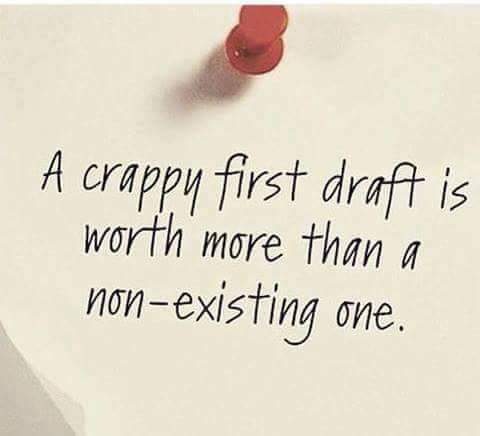
I saw  this on Facebook this morning and it struck a chord. I was a guest at a book club meeting yesterday at the local library, and one of the members stated, “I don’t know how you do it. I could never write a book.” I hear that a lot, even from people that have that burning desire in their eyes as they say it. You know the one’s I mean. They talk about writing something all the time, but never seem to get around to doing it.

Well this photo says it all to me. Writing something is better than writing nothing, even it is crap. Just like any discipline whether it be sports, acting or writing, it takes practice. If you don’t exercise your muscles, you’ll never become stronger.

If the passion is within you, don’t fight it, write it.  (Hey, I like that quote!) We all have busy lives, but if you’re passionate enough you can schedule the time to sit down and at least write a few hundred words a day/a week/ on the weekend. Even if you’re just jotting down ideas in a notebook, it’s something.

Writing takes discipline and study. Just like an athlete must eat right, practice and exercise, so must a writer. Find some books that will help you improve your craft, and if a novel intimidates you, start with a short story. Find someone more experienced in writing than you are (not a family member), and ask them to read your work. This will toughen your skin and make you a better writer, preparing you for the volumes of rejection letters you will receive.

Writing is a personal craft, and we “pencarriers” tend to fall in love with our words, but the best thing you can do is be open to feedback. It helps you grow. Embrace those negative reviews if you’re published, and, if not, embrace the critiques you receive from someone you’ve asked to review your work.

The most important thing is write! So write on, my friends, write on.


Posted in Uncategorized | Leave a comment

Advantages of Book Clubs

Mascot Illustration of Books Having Coffee Together - Book Club

I love Book Clubs and Reader’s Groups! Last week, I was having a conversation with another author and the subject of Book Clubs came up. He asked what I thought the advantages were to being connected with a book club, and how I linked up to them.

First, the advantages…

  • New friends
  • Loyal fans
  • Loyal reviewers
  • Great place to find beta readers and proofers
  • Readers will share your book with their friends
  • Wonderful animated discussions about the author’s stories, plots and characters
  • The wine’s not too shabby either

All I want as an author is to give readers joy and a few hours of escape while reading one of my stories. Knowing, friends in a book club who enjoy my books are reading something I’ve written and then invite me to discuss it with them, fuels my writing engine. I’m linked up with a few book clubs and they are all fantastic to spend time with.

How did I find them?  Here are a few ways to become hooked up with a book club.

  • If you want to approach a book club as an author, be sure your genre matches what they enjoy reading
  • The best way to meet members of a book club is to invest the time and money into attending author/reader events.
    • There are groups on Facebook that advertise these events in your area or you can use Google for Author Events
  • Check with your local library for book clubs that meet there and enjoy reading your genre
  • Ask at local book stores
  • Ask your friends
  • There are book club groups on social media sites like Facebook, Goodreads, etc. Be careful introducing yourself into these clubs as an author. Many clubs are spammed by authors only wanting to sell their books. Don’t be this person. Join the club for the pure joy of discussing good books.

Readers enjoy meeting authors and learning about the writing process. Becoming aligned with a book club has been a fabulous experience for me. I’ve also made some very special friends.


Posted in My Personal Journey, Writing Tips | Tagged , , , , , , , , | 2 Comments

Start Small But Set a Goal

I was just texting with a friend of mine that I haven’t spoken to in a while. She’s had this story rolling around in her head for a long time, yet hasn’t written a word. We all allow everyday life to take precedence, but sometimes you just need to hunker down. Sometimes it’s a matter of being overwhelmed. Are you like that? Just don’t know where to start? As Julie Andrew sings in the Sound of Music, “Let’s start at the very beginning…a very good place to start.” 

Begin writing. Don’t worry about plot, characters or point of view. All that can be handled later. Set yourself a goal of so many words per day, and carve out the time. Begin to discipline yourself to write something every day. Even if it is just an idea for a story, write something. If you don’t feel like writing, read about writing. Begin the journey with a few good resource books. I’ve mentioned these before, but two of my favorites are Bird by Bird by Anne Lamott and On Writing by Stephen King.

Once you begin, I promise you will want to keep going. Those characters in your head will see the light at the end of the tunnel and clammer to be released. Enjoy the experience.  Keep me posted on your progress.


Posted in Writing Tips | Tagged , , , , , , , , , , | Leave a comment

Patience Is A Writer’s Best Friend

African Spurred Tortoise

I’ve just come off of a writing jag, and finished a four book series. Whew. I’ve neglected my blog, so I wanted to take some time this morning to reflect on my writing journey. I’m often asked by other writers and readers, what is the hardest thing about writing? That’s an easy one. Patience.

I’m often tempted to move at the speed of a cheetah chasing a gazelle, when I should be the slow, steady tortoise.  I’ve witnessed this in other authors as well. You know when the work is rushed and, as they say, “not ready for prime time.” Patience is a difficult virtue to master, but I’m learning.


Here are some tips on when and how to use patience with your writing:

  1. Once you’ve written the first draft let the manuscript sit for a few days at least. Not hours…days or even weeks. When you pick it up again, you have fresh eyes.
  2. When editing, take the time to analyze the words you’ve written. Review your work in this order: manuscript, chapter, scene, paragraph, sentence  Break it down and study it to be sure you’ve utilized words in their most powerful way.
  3. Review the five senses in your writing. Can your reader feel the scene? Smell the roses, taste the salt air? How are you describing color?
  4. If you write a series, write it all before releasing the first book.
  5. It takes time to build a reader base. A lot of time. Don’t give up
  6. Don’t force the story. If a scene isn’t working, walk away. Give your brain time to relax. Sleep on it.
  7. Take the time to work with a professional editor and build your work into the best it can be. Those readers will still be there when your book is ready.
  8. Work on building your craft every day. Challenge yourself as a writer.

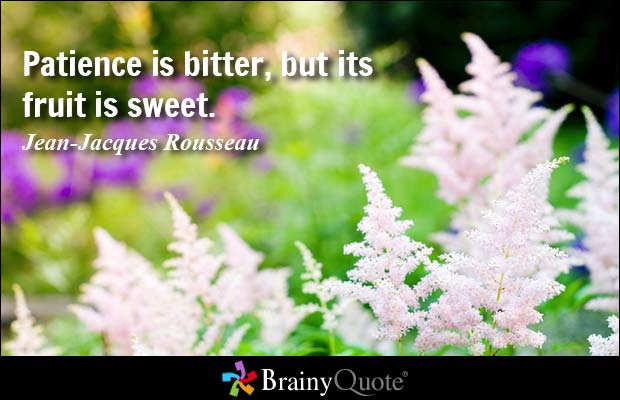
I hope you find some of these helpful. Exercising patience is never easy in any profession, but I’ve found it particularly challenging with writing. The results are worth it.

jeanjacquesrousseau122782

Share what patience has taught you.

Happy writing.

Posted in My Personal Journey, Writing Tips | Tagged , , , , , , , , , , , | 3 Comments

Third Person POV – Huh?

Third person Point Of View can be quite confusing and take on many forms. A writer needs to be cognizant of their utilization of those forms. In this blog entry I will attempt to help you distinguish between the types of third person POV and how to successfully use them in your writing.
The first method of third person narration is the Dramatic or Objective Point of View. This method is used most often by writers and involves rendering action and speech that all the points of view share. You are not in a particular person’s head from a narrator’s standpoint. The presentation is limited to only what is spoken and what happens. There is no presentation of inner thoughts of the characters. This leaves readers the freedom to react on their own accord, much like a jury in a trial.
Next, let’s discuss the Omniscient Point of View. Omniscient means all-knowing. This narrator can see all, know all and potentially disclose all. Here the speaker of the novel presents not only action and dialogue, but also reports the inner thoughts and reactions of the character. In reality, we can never know what is in another person’s mind, but we make assumptions, and that is the purpose of the omniscient point of view. This can add dimension to the characters in a novel.
Within the omniscient POV you may have the Limited or Limited-Omniscient POV and this focuses on the thoughts and deeds of the main character in a story. Personally, this style works well for me. Here I can present my character’s thoughts and motivations. The reactions and emotions of my characters take on a depth I can’t accomplish with dramatic point of view. It gives a story richness without limiting whose eyes a reader can view a story through.
Limited-Omniscient POV leads many editors to criticize writers for “head hopping”. With head hopping a writer adjusts this Limited-Omniscient POV too quickly and without a scene break. It can be utterly confusing for a reader when a writer presents a scene from two limited-omniscient points of view. That is not to say that you can’t use more than one Limited-Omniscient POV, but it is easier on your reader if you have an obvious scene break or chapter break prior to changing which character’s thoughts and emotions you are presenting. This is particularly important in love scenes or arguments. You can illustrate what your POV character is observing and that will give you the ability to show your reader what is happening without getting into the other character’s head.
Third Person POV can be an easy way to tell a story and give a writer the ability to richly describe the events and actions of a story as well as demonstrate the deepening of all the writer’s character’s development. Write on my friends and enjoy exploring many different points of view for the depth they can add to your stories.

Posted in Writing Tips | Tagged , , , , , , , , , , | 6 Comments

Loving and Hating Your Characters

I’ve just finished my second book in The Guardians of Spirit Rock series, and it launches on 3/4. The third and fourth books are almost ready to go to the editor. I wanted to take a moment to reflect on writing this Paranormal Romance set of books.

I think what makes these stories so powerful is how I feel about my characters. Even though I created these characters, I’ve found I still need to be emotionally invested in what happens to them in order for my writing to shine. I want their experiences to ring true to my readers, and in order to do that, I need to really care about them. Do I have to love them all? No. I can hate them too. Strong emotional attachment allows the author to use the five senses, and if you write paranormal, a sixth sense, to convey what these characters are experiencing.

Dig deep. Allow yourself the time you need to experience what you’re writing. If something tragic happens to your character and you don’t cry a deeper emotional attachment is needed. If you translate that emotion into your writing, your reader will feel it too. Once you have that emotional attachment, take the time to choose your words wisely. Use active verbs, stay in the character’s POV, be careful not to head hop.

If you’d like to experience what I mean, check out The Guardians of Spirit Rock.

Secrets of a Wolf

Secrets of a Wolf Final cover

Cry of the Cougar

man in thought

Available for Pre-Order now. Releasing 3/4/2016

Let me know what you think.


Posted in Writing Tips | Tagged , , , , , , , , | 3 Comments

Writing Tip – Avoid Flat Stanley

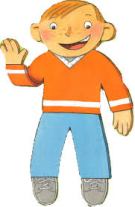
flat stanley

In case you don’t know who Flat Stanley is, he was a project my daughter had to complete in elementary school. She mailed a paper cut out character named Stanley to my sister in Maryland. The poor woman had to take pictures of herself with Stanley at various tourist attractions. Not an easy task in those days without a cell phone, but she soldiered on and Stanley had quite an adventure.

My point in telling you all this? Don’t give your readers a Flat Stanley. Write three dimensional characters. Readers abhor lifeless, dull, and boring . They want to know what makes your character tick. Sprinkle in some background, NOT too much at once, but as your character becomes involved in more situations throughout your plot, reveal things you want your reader to know. Are they afraid of spiders, have OCD, wish they’d never moved to where they live now? Little things make a difference.

You can also accomplish a well-rounded character through your dialogue. You can show (not tell) emotions that make your character real, building their personality for your reader. When your character gets angry, what does he/she do? Stamp their feet, turn purple in the face, scream? Or do they silently brood until they explode. Do they have a laugh like a donkey or wail when they cry? You get the picture.

Another thing to remember…your character needs purpose for their actions. No one is perfect. We all have flaws. A character should be in sync with what’s going on around him/her. Stop and think about your characters’ motivation. What do they want? How are they going to get it? What obstacles will they face on their journey?

Don’t make your reader suffer through a character with no pizzazz and personality. Round them out, make them come alive. Breathe breath into them until they jump out of the book, grab your reader’s hand, and yank them right into the pages!

Flat Stanley has a noble purpose, but not in your novels.

Other writers, how do you make your characters less flat? Please share.


Posted in Writing Tips | Tagged , , , , , , , , , , , | Leave a comment

More on Showing Vs. Telling -“Felt” A Word to Avoid

Embarrassed Emoticon

As I’ve gone through the editing process with Secrets of a Wolf, I can assure you that a GOOD editor is more valuable than any precious gem. Worth more than twice their weight in gold! Always be willing to improve your craft and a great editor can help you do that. They will enhance your voice!

I digress. My topic in this entry is about Showing vs. Telling, another one of my weaknesses and a very easy trap to fall into when writing any story. It is SO SO boring to a reader. I’m just going to deal with one word here that has turned into a crutch word for me, and for those of you with more experience in the craft, this may be old news, but for me it’s been a true learning experience.

The word is…Felt! This word sucks you right into the “telling” trap. Allow me to share a few “out takes” from my recent editing experience.
My Sentence: She didn’t know if she felt relief or terror.
My Editor’s Comment: Describe what she is feeling – don’t tell us
My Revision: Relief flooded her. The door latch held firm, but eventually she’d have to face him. There was no other way out of the room. Sweat trickled down her back and dampened her palms. Her heart raced. She had no other options.

My Sentence: I got dizzy and felt sick
My Editor’s Comment: “Felt is telling. Revise”
My Revision: My world spun out of control. The car rolled over and over, rattling my brain against my skull, and churning my stomach. I fought the nausea but lost.

I think you get the idea. No more “felt” show us!

Posted in Uncategorized, Writing Tips | Tagged , , , , , , , , , , , | 16 Comments

Writing Tip – Organizing Your Novel

Many readers have asked me how I get started on writing a novel, so I thought I would share my process with you. Each author has their own method on what works for them, so there is no right or wrong way. But if you’re struggling, maybe these tips will be helpful.

There are “outliners” vs. “pantsers” in the writing world. A “pantser” is a writer who writes “by the seat of their pants” or goes with the flow. They enjoy the freedom of seeing what happens as they go along. An “outliner” is someone who outlines their book knowing the flow ahead of time. “Outliners” feel this gives them a structure for their muse and keeps them on track.

I am a little of both. I build a brief outline, and then as I’m writing if the characters hijack the bus and take the journey in a different direction, then so be it. At least I have a way of getting back on track if I find myself in the flabby middle of my book with nowhere to go.

Here are the steps I take when I begin a new book:

  1. Write the blurb for the back of the book – this gives me the full vision of what I want the entire story to be in a brief synopsis
  2. Do a character sketch for each character, spending more time on the protagonist and antagonist – this allows me to build my character’s personality in my mind. Every detail is important to a reader in how a character behaves, reacts, looks, etc. It also gives me something to refer back to when I get halfway through and can’t remember my hero’s eye color. See this posts for suggestions: Character Sketches
  3. Build a brief chapter outline – one or two sentences per chapter all the way to the end. This helps me know the path I want to travel. I don’t always stick to it, and that’s the beauty of creativity, but it gives me something to refer back to in case I wander too far off the path.
  4. Make sure the first page has a hook. I make sure my hook happens within the first paragraph if I can, but at a minimum the first page. I pride myself on writing page-turners and an immediate hook is a must.

Pretty simple, huh? This is not a full proof process, but hopefully it can help you get started. I’d be delighted to answer any questions if you have them.

Posted in Uncategorized | 23 Comments

Sittin’ On The Porch – Fran Orenstein – Writing for Children Part Two

Last week Fran joined me on the porch for the first part of her education post about writing for children. She’s back today and we are chatting this out before it starts raining. So sit back and enjoy your sweet tea with us, while she gives us the rest of her wisdom.

How does the writer develop characters kids will love or hate?

Characters need to come alive for kids. Average kids are not naturally introspective and don’t read into the psychological make up of a character or see the nuances. They are pragmatic and see the obvious. So establish characters that real, breathing, feeling, people. You are three-dimensional and your characters are, too.

Interview your character and report back as if you were a reporter on a T.V. talk show.

Write everything down on a piece of paper or on a story board.
Include the following, even if you don’t ever use them. It gives you a perspective while you’re writing:
1. Appearance
2. Name, vital statistics
3. Family
4. Friends
5. Location
6. Interests and hobbies
7. Fears
8. Likes and dislikes
9. Love and hate
10. Desires and wishes
11. What is the current problem or problems
12. How would he/she like to resolve it?

Then weave all that into and throughout the story. Some answers will only require a brief mention…Some won’t even appear. They can be seen through the eyes of other characters in the book.
As an example, in The Shadow Boy Mystery ‘tween series, book one Mystery Under Third Base, the protagonist, Willie is described through eyes of the strange boy Huby. “The watcher looked at the brown curls that fell over the boy’s smooth round face. Willie was small and thin, but the watcher could see a hint of the tall, strong man he would one day become.”
In the same paragraph, Huby then describes himself through his actions. Unconsciously the observer [Huby] pushed aside his own hair that fell forward in straight, yellow sticks across his eyes.
In the single volume trilogy of fantasy thriller novels, The Book of Mysteries for ‘tweens and young teens –

Tyler’s uncle creates the first spark of excitement at the very beginning of book one, Revenge of the Wizard, when he tells our hero, Tyler, “ You must find a shop called Beadlesberry’s Rare Books. That in itself is difficult, because the bookshop is sometimes there and sometimes not,” Thaddeus said.
Tyler squinted up at his uncle. “What?”
Thaddeus smirked. “Well sometimes it disappears. Let’s just say it’s an unusual bookstore.”
Tyler nodded like he knew what his uncle was talking about.
… “Now where was I?” Thaddeus said, scratching his ear. “Of course. First find the bookstore…. It’s on the left, if it’s there. Or was it the right? No, I distinctly remember the left, between the candy store and the drugstore. The book you want is The Book of Mysteries. Great fun. And watch that Beadlesberry. Strange fellow, really strange.” Thaddeus flicked his wrist toward his face. “Oops, I’m late. Have to catch that flight west. You enjoy your adventures, and be sure to tell me all about it when I see you again.” He spun toward the door, took two giant strides, stopped, and twisted around. “Make friends with the book or it will thwart all your fun.”
This early interaction between Tyler and his uncle provide the opening of a door into the strange and fantastical world Tyler and his best friend, Zack will experience.

Repeat this development process for all the main characters and some of it for the important secondary characters to give them dimension. Avoid cliché characters – the bully doesn’t have to be hulking, he/she can be the tiniest kid on the block. Fat people are not necessarily jolly, in fact it can be a cover for anger, misery. The character who appears to be cruel and villainous can turn out to be the best asset to the protagonist.
Reveal the characters to the reader through observation, conversation, body movement, thoughts, and behavior.

Finally, show, don’t tell. Readers relate to action and in this visual world of today, kids will understand movement and active description. Consider this excerpt from The Centaurs of Spyr book three in The Book of Mysteries trilogy.

“Mag Merwil shook his head. Just as he was about to speak, they heard a violent scratching at the door. Kai rushed to open it. A young sapling bent forward from the yard, a branch reaching toward the opening where the door had been. Kai jumped back before it scratched his face. “Oh pardon me, young master Kai, but I have an important message for Mag Merwill.”

They all ran out of the house and followed the line of saplings that appeared one by one along the path. When they reached the gate, Mag Merwill addressed the elm that stood guard. “You have news for us, Master Elm?”
“Indeed! A new turn of events has occurred that may have bearing upon your problem.”
Why can’t he talk in a simple language, Tyler thought? This is like reading some story written a hundred years ago.

This scene has visual elements, movement and talking trees, but you also get insight into Tyler through his thoughts.

I could have written it this way. There was a knock at the door. Kai opened it and looked at the sapling standing there.
“I have a message for your father,” the sapling said. “Follow me.”
They all went down the path to the elm tree that was standing guard at the gate.
“You have news for me?” Mag Merwill asked?
“Yes, something new is happening.”
I wonder what it is, Tyler thought.

Which would catch your interest? The verb to be is important as it denotes existence, but it’s also a passive verb. Which of these makes you happy because there is visual movement? He was singing as he was walking along the path. or, He sang as he trotted along the path.

A writer jumps into the confusion of rules, and screams, “I can write a children’s book.” Then he wipes the sweat off his brow, she flexes her fingers and stares at the blank page. WAIT! You forgot a few things. Go back to the beginning and choose an age group, pick a genre, create a plot, develop characters and a setting. Now breathe deeply three times, and begin.

Great insight into writing children’s books, Fran. Thank you so much for sharing with us. Find out more about Fran on my Porch Guests page.

If you’d like to be a guest on the porch, give me a hollah! The only catch is you have to talk about something you’ve learned along your writing journey that can help other writers.

Until then…Write On my friends.

Posted in Sittin' On The Porch, Uncategorized | Tagged , , , , , , , | Leave a comment